
Before drawing the tattoo: turn an idea into a clear design brief
Practise listening, clarifying scale and composition, and agreeing on expectations with a simple brief. A consultation exercise for aspiring tattoo artists.
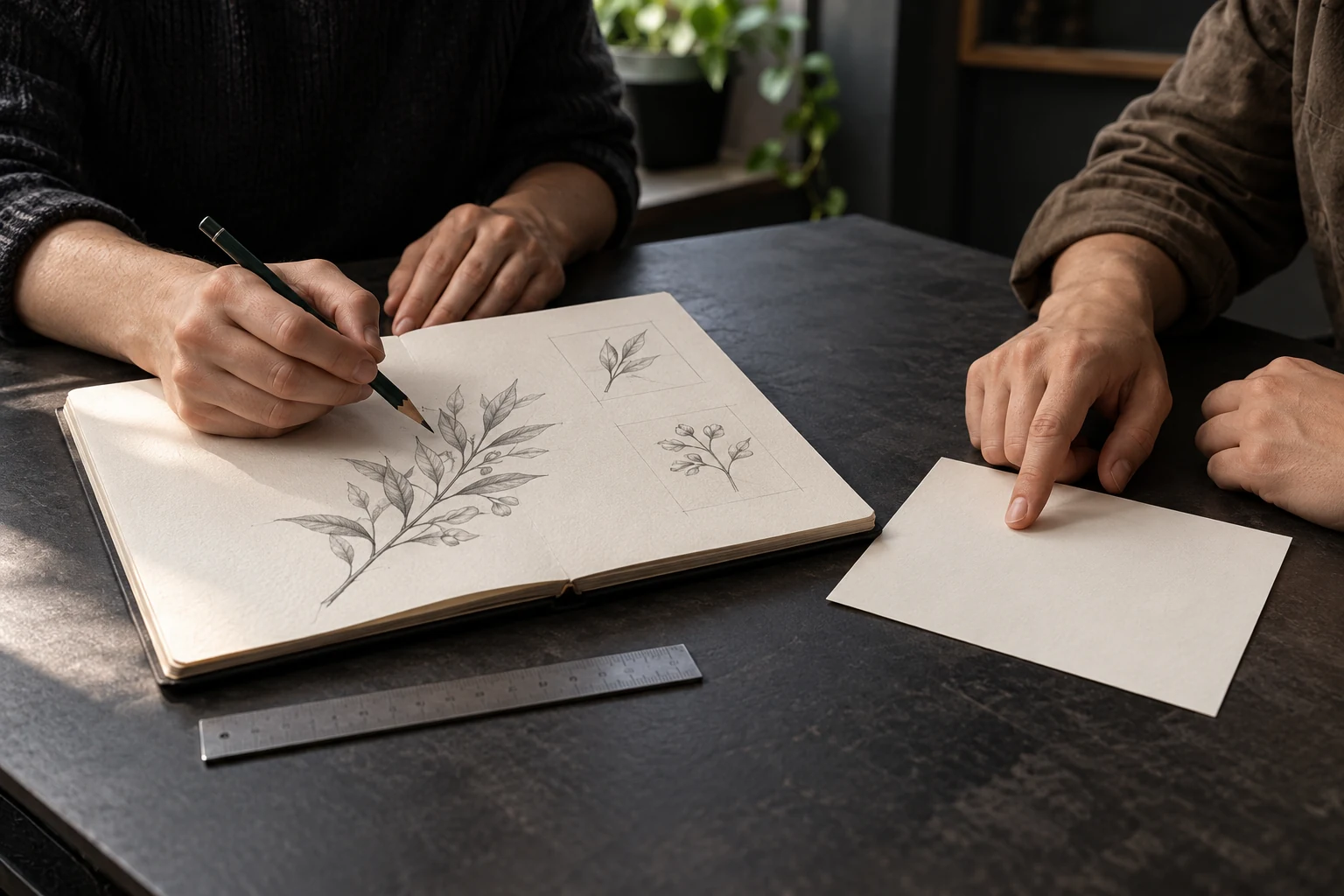
Before the first sketch
“I want something floral, small, but noticeable.” You could start drawing a rose. Or two questions later, you might discover that the person imagines a long branch, without colour, leaving room to extend it later. Finding a beautiful flower was never the whole problem: the commission still needed defining.
If you are learning to tattoo, this conversation deserves practice too. A brief is a short record of the intended outcome, the decisions made and the questions still open. Try building one on paper before an assumption turns into hours of drawing.
What studios actually ask
Ink & Dagger asks for an idea, references and placement, then reviews the request to guide the next step. Artist Kiki Filigree asks clients to specify up to three design elements and identify anything essential. These are examples of their own processes, rather than a universal industry rule.
Start with what matters
In a practice consultation, try an open question: “What would you like this piece to include?” Hear the answer before proposing subjects. Then separate the main element from supporting details: perhaps the flower is essential, while the frame only came up because it appeared in a photograph.
You do not need to ask for an intimate story to justify every tattoo. “I like the way it looks” is a valid starting point. Record what the person wants to share, then return to visual decisions: what should stand out, what mood they want and what they would rather leave out.
Turn vague language into useful decisions
These suggested questions are for practising the conversation. They open possibilities without supplying the answer.
| What to check | What you hear | What you can clarify |
|---|---|---|
| Scale | I want it small. | Could you indicate an approximate size in centimetres on paper? |
| Appearance | Make it delicate. | Do you mean the drawing, contrast, size or more open space? |
| References | Something like this photo. | What appeals to you: the subject, composition or colour? |
| Priorities | I want to add several things. | Which should be the main element, and which could be left out? |
Placement belongs in the brief
Draw a simple outline of the proposed area and try two different thumbnails. This is a composition exercise, not a plan for applying a tattoo to skin. It helps reveal whether you both picture a long, compact or wrapping format.
When a measurement or decision is missing, write “to be confirmed”. That small admission is more useful than turning a guess into a requirement. Add a note about what interests you in each reference image, so a photograph becomes a conversation aid rather than a design to copy.
One subject, two arrangements
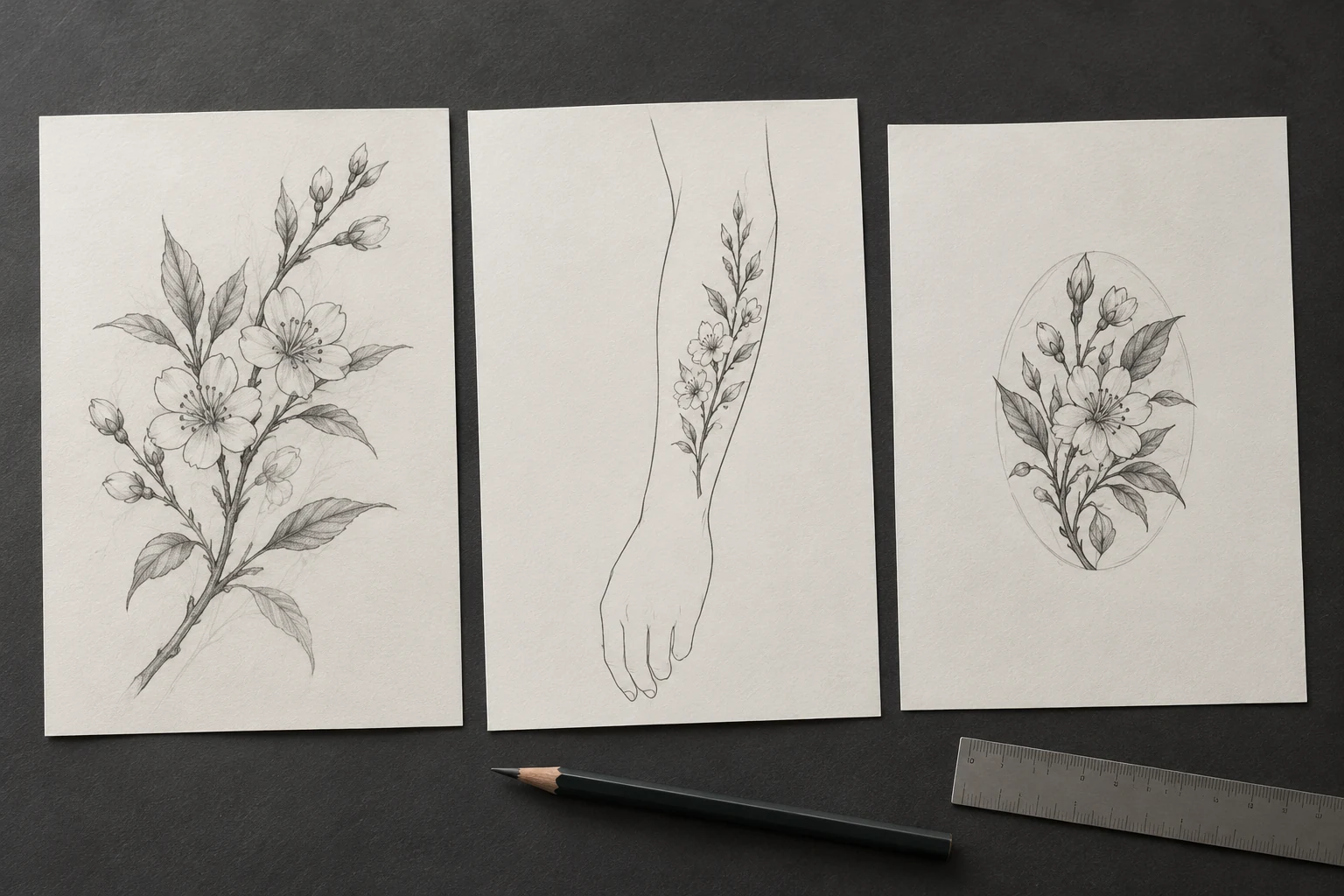
Agree on expectations too
Dark Water explains that consultations and the timing of design previews vary by artist. Its booking information requests a concept, size, placement and references to help with an estimate. Check the specific process before promising deadlines or deliverables.
A summary you can both recognise
For our fictional floral request, your note might read: “Black botanical branch, vertical composition for the left forearm. The flower is the focal point; no frame. Size and plant species to be confirmed. Prepare two thumbnails to review the direction.” This is not an approved design yet. It is a shared starting point.
Repeat that summary in your own words and ask whether it captures the idea. Establish what will be reviewed next, when it will be seen and what is still undecided. During an apprenticeship, agree these steps with the person supervising you.
Practise without tattooing
Ask someone to invent a commission and spend ten minutes discussing it. Before drawing, check that your summary includes these four points.
- Main subject and essential elements.
- Proposed placement, orientation and approximate size, or a note that it is undecided.
- Visual preferences and elements to avoid.
- The next step and the questions still open.
Listening is the first skill
If your practice partner recognises their idea in the summary, you have a starting point for drawing. If they need to correct you, the exercise has still worked: you found the misunderstanding while it was a sentence, rather than a finished piece.
Sources and editorial notes
Manufacturer and organiser facts are linked above. Our selection and reading advice expresses TattooXpert’s editorial judgement.
Our editorial method