
Maud Wagner: behind the portrait of a tattooed woman was a tattoo artist
Two archive photographs offer a different way into tattoo history: Maud Wagner, Nora Hildebrandt and what a portrait reveals—and leaves out—about a life.
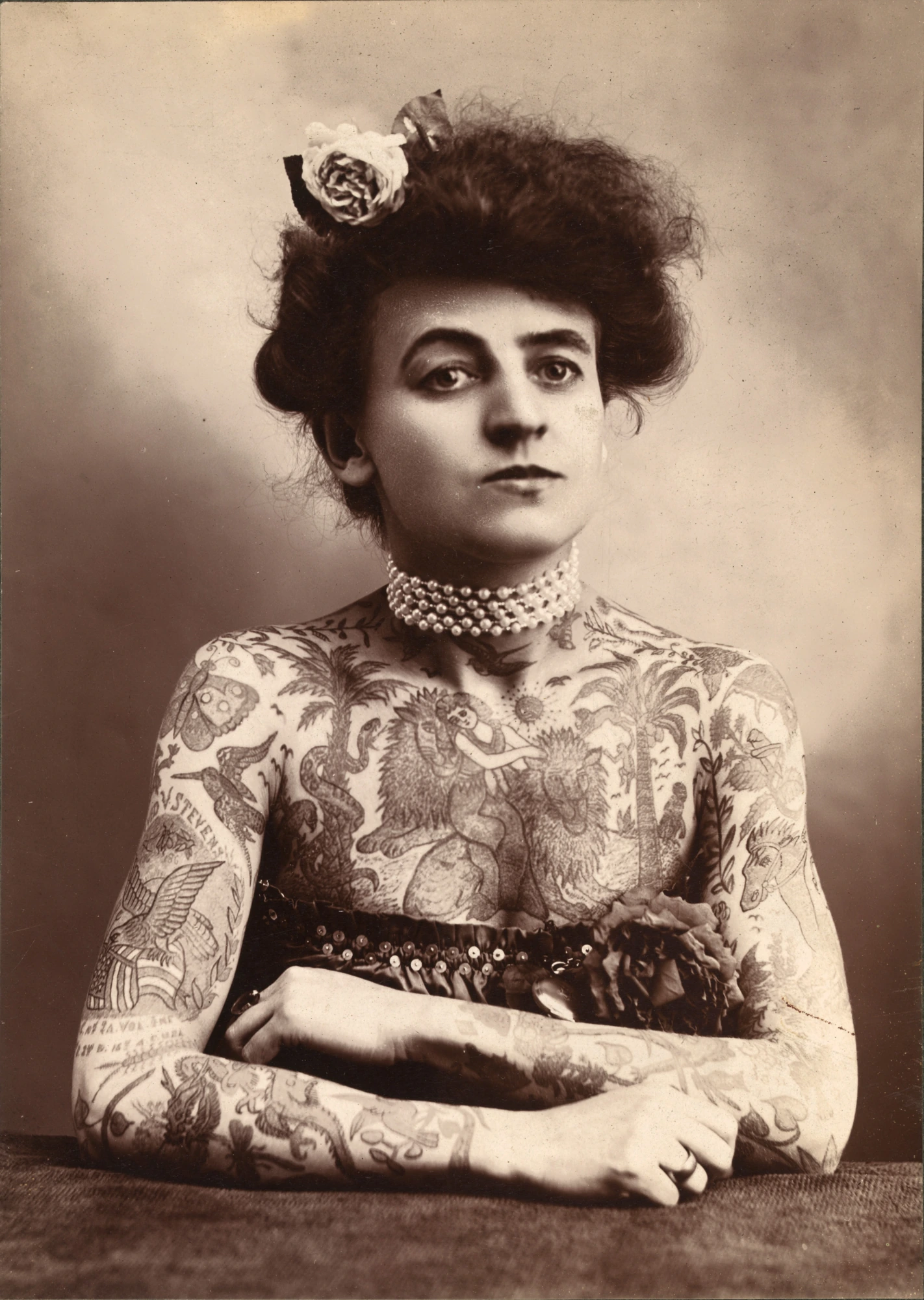
A photograph worth a second look
First we notice the tattoos. Then the necklace, the flower in her hair and the folded arms. The woman looks towards the camera; the portrait is compelling without an invented story attached. Yet the photograph alone cannot answer one question: who was she beyond the person wearing those designs?
That change of question matters. If you are beginning in tattooing, learning its history also means looking at the people who worked in it, rather than simply collecting pictures of tattooed skin.
Maud was a tattooist too
The Library of Congress identifies the sitter as Maud Stevens Wagner and dates the photograph by The Plaza Gallery, Los Angeles, to around 1907. The Franklin County Historical Society supplies another part of the story: born in Emporia, Kansas, in 1877, Maud worked as an aerialist and contortionist and became a professional tattoo artist who travelled the country.
From photographed body to working practitioner
That information changes how we read the portrait. We are looking at someone who also knew tattooing as work. A photograph cannot let us assess her linework, reconstruct a session or credit her with every design she wears. It can lead to better questions: how she learned, where she worked and which records preserve her career.
For an aspiring artist today, that is a useful cultural lesson. A history of tattooing built entirely around machines and famous names leaves too much out. There is room for people whose work remains outside the frame.
The photograph has a date; our impressions do not
In this portrait we can observe plant forms, animals and lettering sharing the arms and torso. The necklace and hairstyle belong to the presentation just as much as the tattoos. It is worth noticing that relationship rather than cropping the image until it becomes a catalogue of motifs.
We may read confidence into a pose, but we cannot know an emotion. Nor should we assign a universal meaning to each design: recognising an animal or flower does not explain why that person chose it. Curiosity works better when we leave a question open instead of filling it with a legend.
Another woman, another portrait
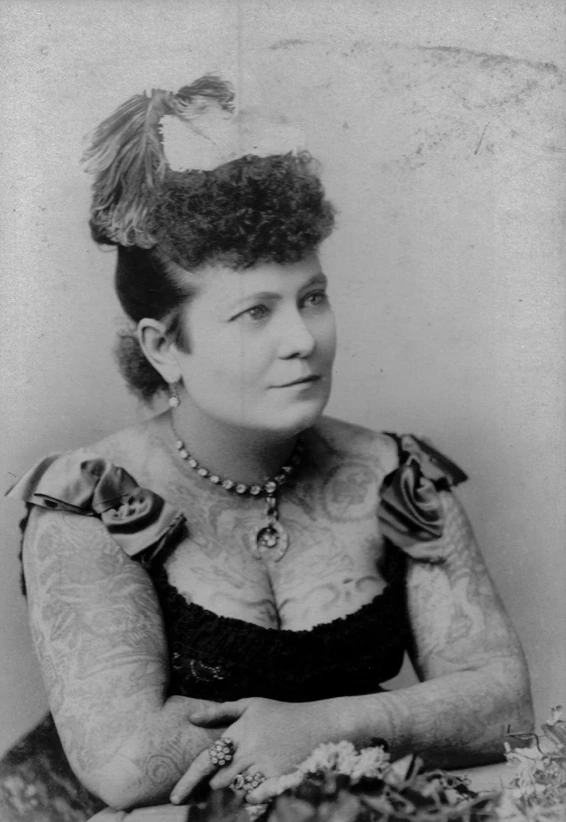
An archive is larger than one familiar face
The historical exhibition Tattooed New York brought together more than 250 items, including photographs, sideshow banners, designs and machinery. It also included visual records of Indigenous practices and material from New York’s tattoo-ban era. Together, these objects offer a history with different forms of evidence and multiple participants.
What to notice when you return to these pictures
Try reading each photograph in two stages. First, describe without interpreting: pose, framing, clothing, visible areas and relationships between motifs. Then open the archive record and add only what you can support: identity, photographer, approximate date and provenance.
When comparing Maud and Nora, notice what changes in the presentation of each portrait. You do not need to decide which looks more modern or turn their tattoos into a template to copy. The exercise is about seeing how a picture presents a person and what it leaves out.
If you save these photographs as cultural references, keep their credits too. A name is more than an administrative detail: it lets you search again, distinguish individual careers and take the research further.
Remember the person doing the work
Maud Wagner’s portrait deserves a second look for a simple reason: as well as wearing tattoos, she made them. Recovering that professional identity without decorating it with doubtful anecdotes broadens our understanding of who has built this culture.
Sources and editorial notes
- Library of Congress · Maud Stevens Wagner, c. 1907
- Franklin County Historical Society · Tattooed: The Tale of Maud Wagner
- The New York Historical · Tattooed New York
Manufacturer and organiser facts are linked above. Our selection and reading advice expresses TattooXpert’s editorial judgement.
Our editorial methodKEEP EXPLORING.
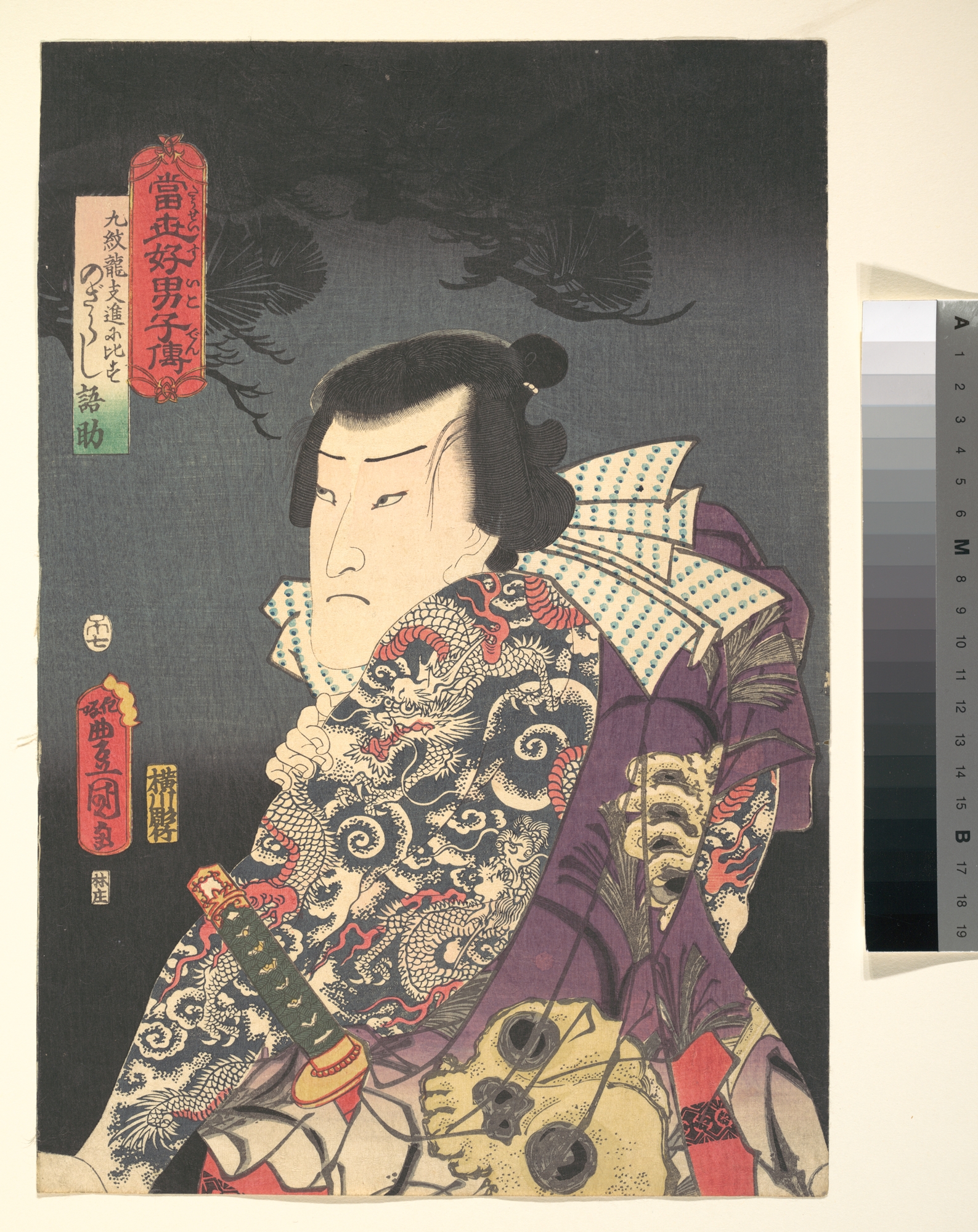
Dragons on paper: the prints that help explain Japanese tattooing
From Water Margin heroes to kabuki actors: two Kunisada prints offer cultural context for Japanese tattooing and a practical lesson in drawing around the body.
TattooXpert
Gathering of Ink: an Oklahoma event centred on Indigenous tattoo artists’ voices
The 23–25 October gathering puts cultural representation at its centre. It offers a reason to look at who makes the work, what they say and where they are speaking from.
TattooXpert