
Blackwork: learning to draw the space you leave untouched
Black catches the eye; the space around it makes the composition work. Explore history, artists and four real photographs before taking those ideas into your sketchbook.
Black cannot solve the drawing for you
On a small screen, a large black shape can look like a decisive statement. Enlarge the image and different questions appear: is the subject clear, is there a direction, and do the gaps separate the forms or look accidental? For a beginner, these are better starting points than shopping for a “blackwork” machine or ink.
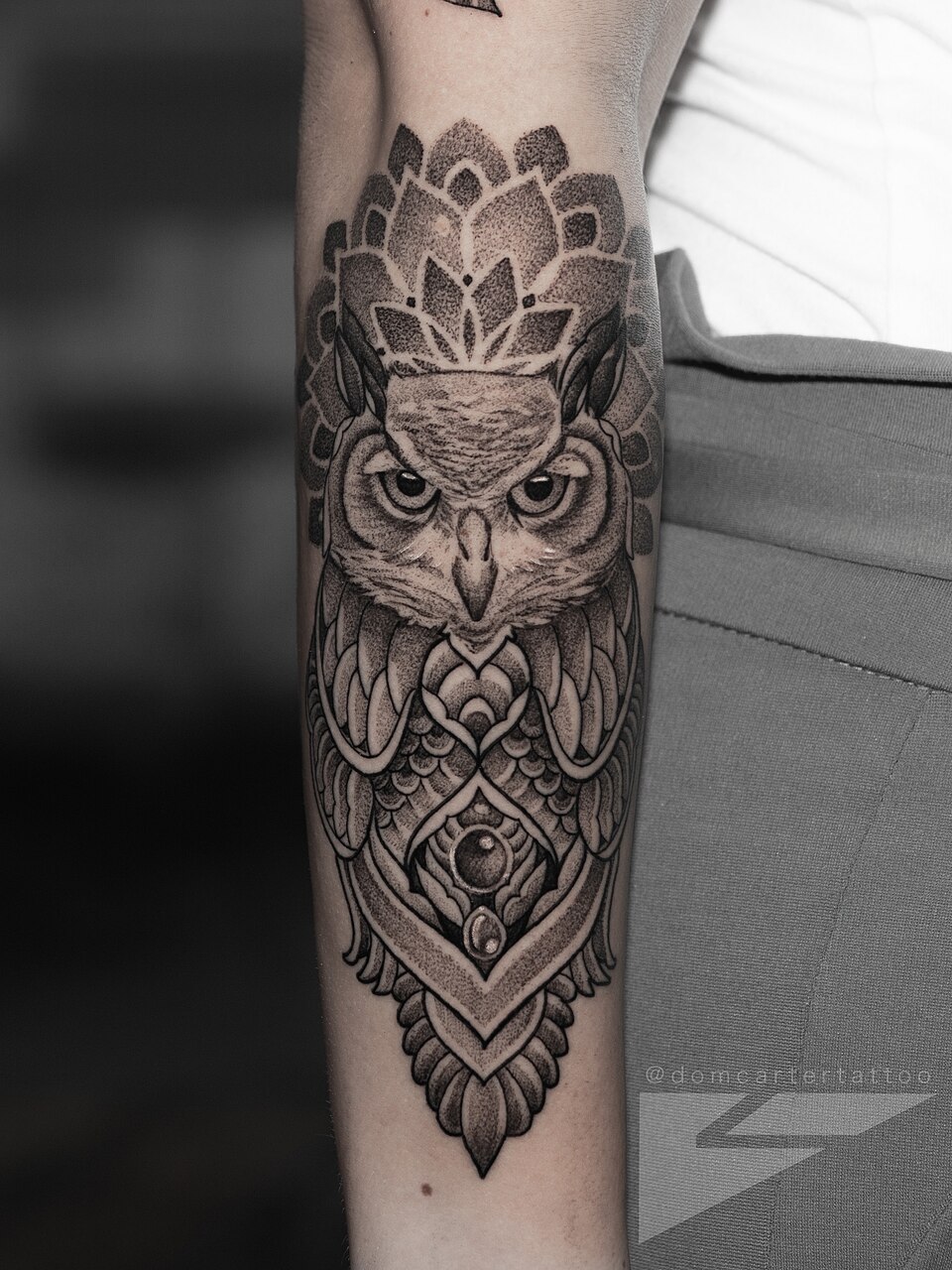
Dom Carter’s owl at the top of this article combines outlines, dark areas and texture. Notice the contrast around the eyes and the way the ornament leads towards the centre. This is a reading of the photograph; a picture alone cannot establish how the tattoo was executed.
Leo Zulueta: an important reference, not the origin of everything
Grand Rapids Art Museum presented Leo Zulueta as a pioneer of contemporary tribal tattooing. Its Black Waves exhibition connects his work with Pacific traditions and records that he began tattooing clients in 1981. It also describes his opposition to copying traditional designs directly without a relationship to those cultures.
That history helps explain part of contemporary black tattooing. It does not establish that one person invented all blackwork, or make the traditions of Samoa, Borneo and the Marquesas interchangeable branches of a Western trend.

Three things to study without touching a machine
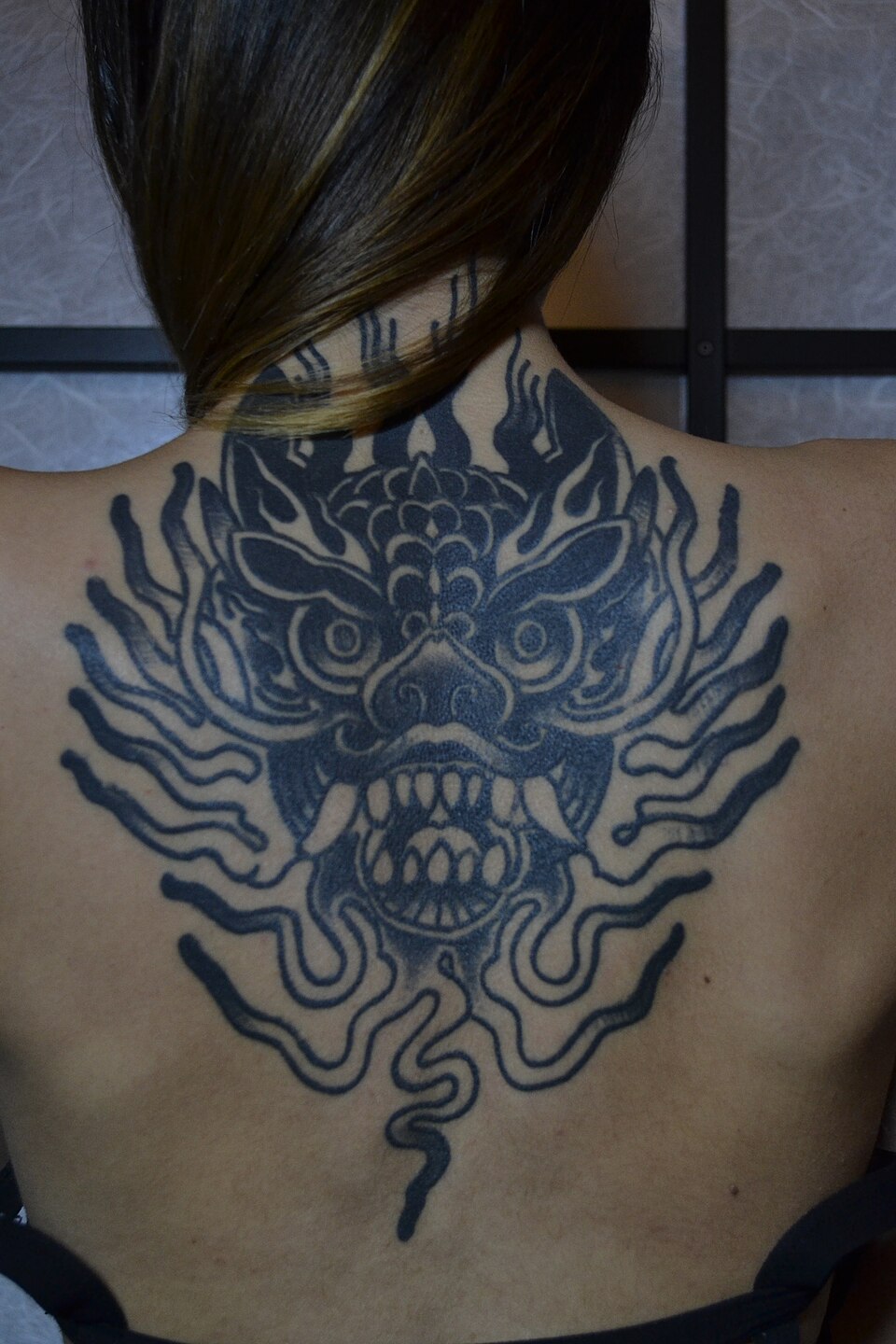
Begin with the silhouette and try describing it with as few lines as possible. Then look at rhythm: how dense and quiet areas alternate. Finally, follow the negative space. Untattooed skin is part of the drawing too.
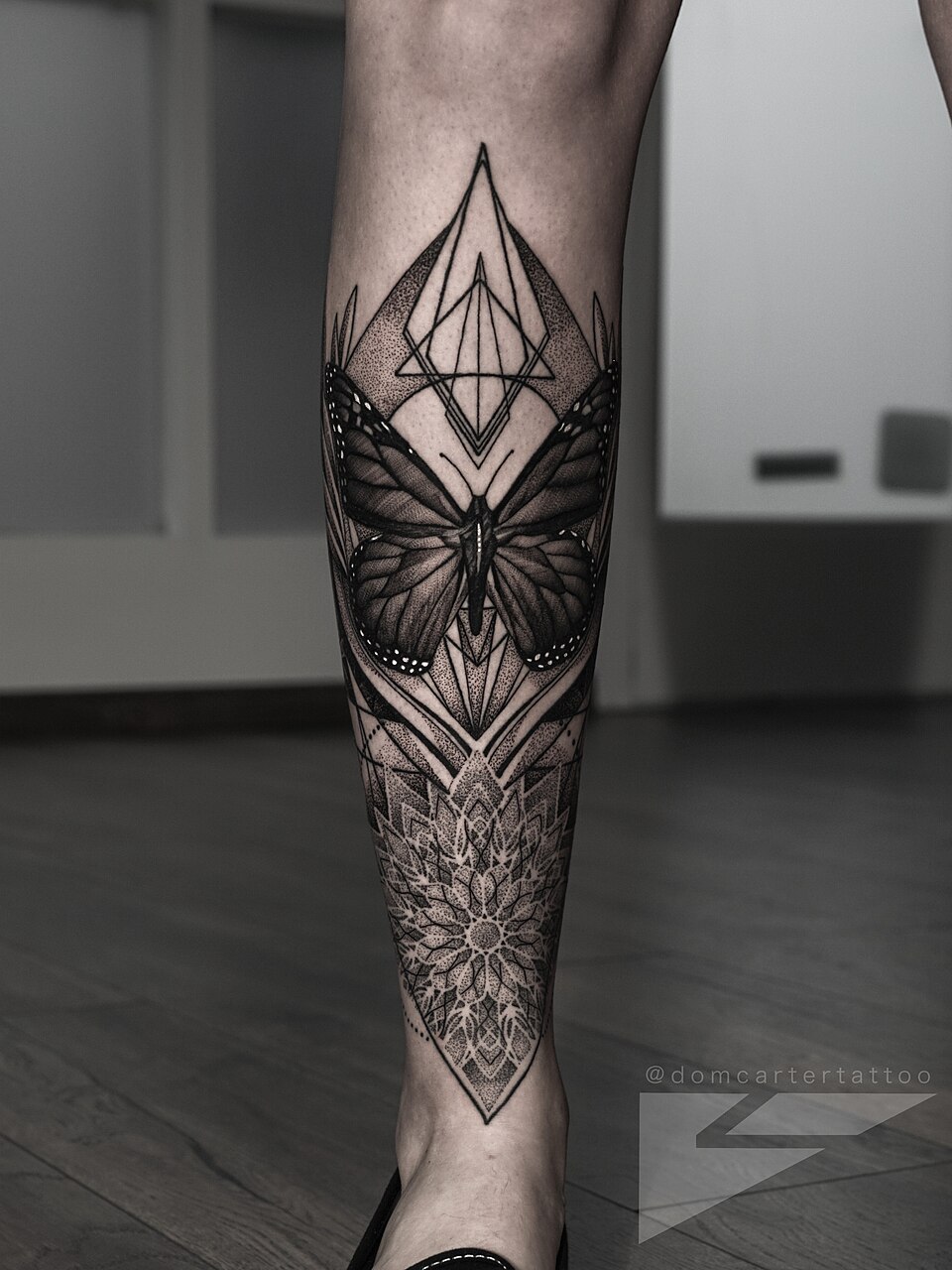
Reverse your usual process in a sketchbook. Draw the spaces you want to preserve first, then build the black around them. If the forms merge when you view the page smaller, revisit their separation. This tests visual readability; it does not predict how every tattoo will age.
A style label is not permission to copy
When a reference interests you, record its artist, source and what you are studying. “I want to understand how it guides the eye” is different from “I will trace this symbol”. If a motif belongs to a tradition you do not know, investigate its context before treating it as decoration.
Leave room for nuance. Black designs can be illustrative, ornamental or geometric, and a piece can combine approaches. A label helps you find references; it does not replace looking at the work.
A drawing exercise you can repeat
Take a subject of your own and develop three solutions. Do not use skin to test an idea you have not yet resolved on paper.
- Make an outline version, a solid-shape version and a third combining both.
- Mark the spaces that must remain distinguishable when the drawing is reduced.
- Place it on a body-area template and review its direction.
- Ask your mentor what they notice first. Compare their answer with your intention before adding detail.
The best next step
Keep all three versions, not just the most striking one. Understanding what changed teaches more than collecting a hundred unexamined images. Black may lead the composition; your job as a draughtsperson is deciding where it begins, where it stops and what it reveals.
Sources and editorial notes
- Grand Rapids Art Museum · Black Waves: Leo Zulueta
- Dom Carter · CC BY-SA 4.0
- Dom Carter · CC BY-SA 4.0
- Tattoo: Mattia Jey, Horror Vacui; foto / photo: Giovanni Da Rin Betta · CC BY-SA 4.0
- Diana Kohrs · CC BY-SA 4.0
Manufacturer and organiser facts are linked above. Our selection and reading advice expresses TattooXpert’s editorial judgement.
Our editorial methodKEEP EXPLORING.
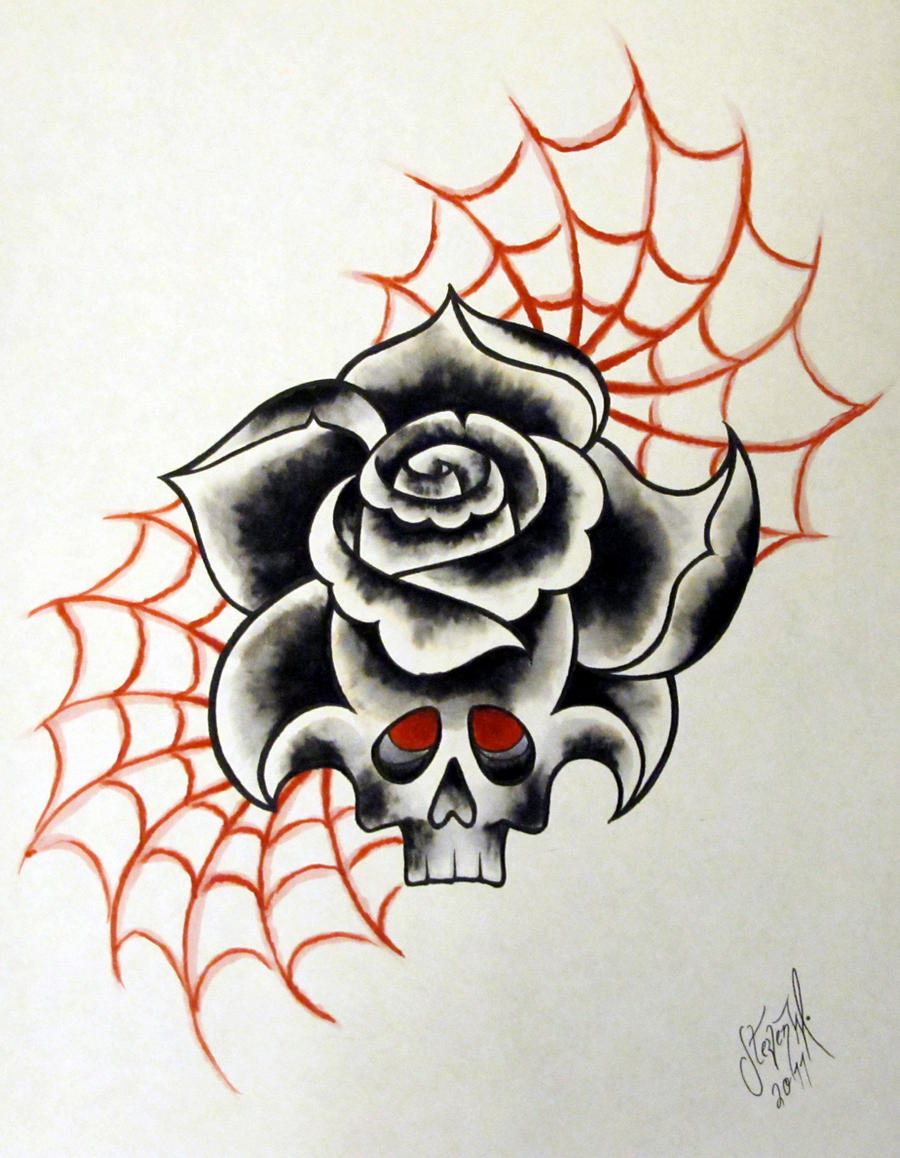
Neotraditional tattooing: beyond pretty flowers and bold colour
Learning to draw neotraditional designs starts with more than choosing a subject. Explore its influences, study real artwork and try an exercise in line, hierarchy and colour.
TattoXpert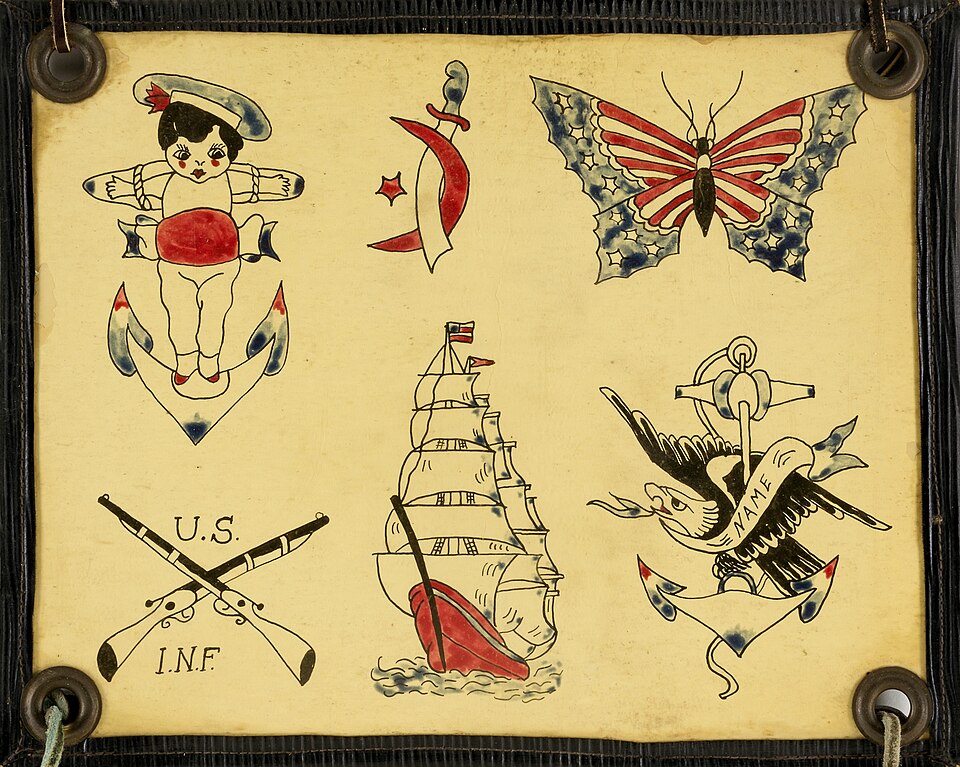
Your first flash sheet: six drawings that show your direction
Flash lets you think about a tattoo before making it. Study two historical sheets, then build your own coherent series with purpose and room to learn.
TattoXpert