
Neotraditional tattooing: beyond pretty flowers and bold colour
Learning to draw neotraditional designs starts with more than choosing a subject. Explore its influences, study real artwork and try an exercise in line, hierarchy and colour.
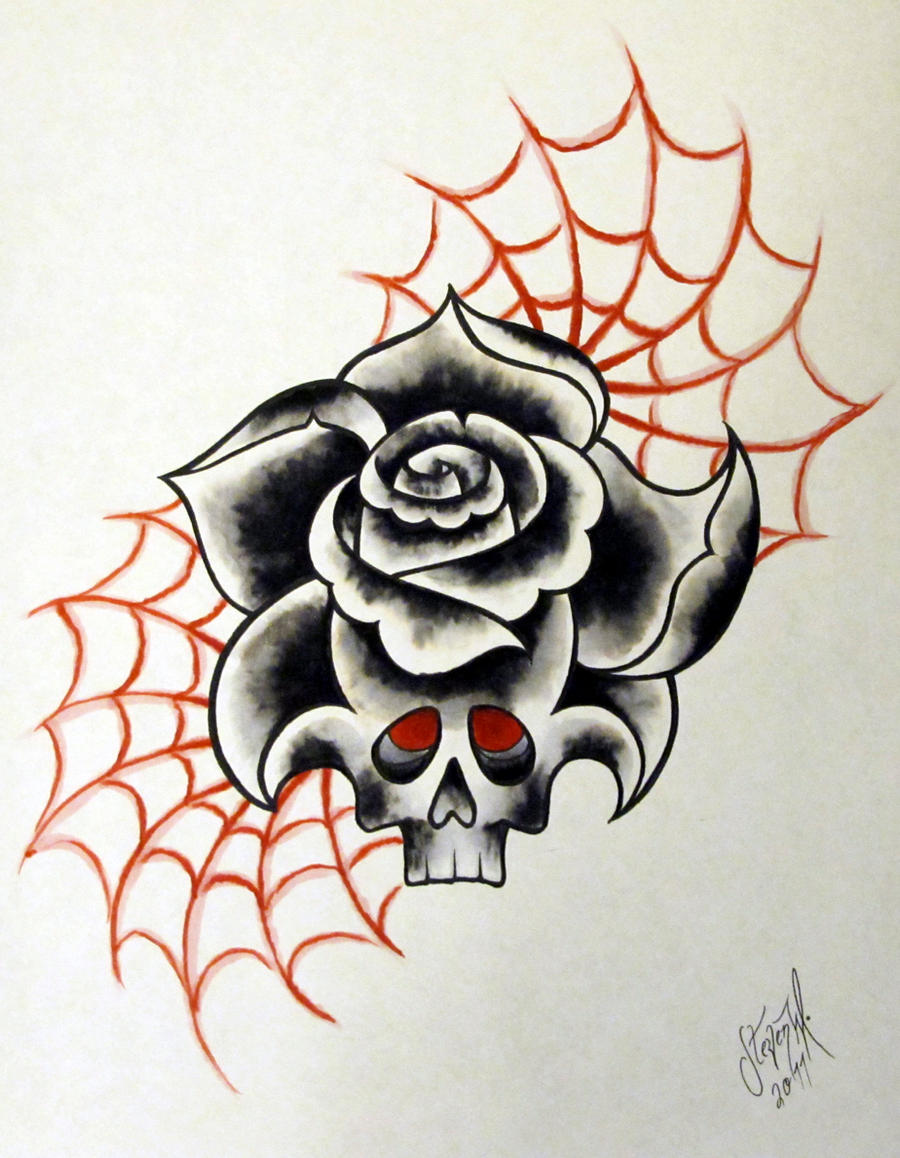
The useful question is not what to draw
A fox, a rose or a portrait can belong to very different styles. If you are starting out, the interesting part of neotraditional drawing is how the elements work together: which line leads, where the dark shapes sit and where the composition breathes. A beautiful palette comes later.
Our cover is a drawing on paper by StevenWorthey, not a photograph of a finished tattoo. Notice how the dark outline holds the flower together while the red web sits further back. That division of attention is worth studying even if your next design contains no roses.
An evolution with several roots
Neotraditional work keeps elements of American traditional tattooing while opening them to greater detail, volume and colour variation. Artist Nina Palagonia describes structural outlines alongside finer detail; OSCO also highlights ornament and dynamic composition. There is no single visual formula.
Tattoodo identifies Art Nouveau and Japanese prints among its influences. Think of intersecting visual languages rather than a neat family tree with one inventor. A contemporary tattoo can share ideas with an old poster without reproducing it.
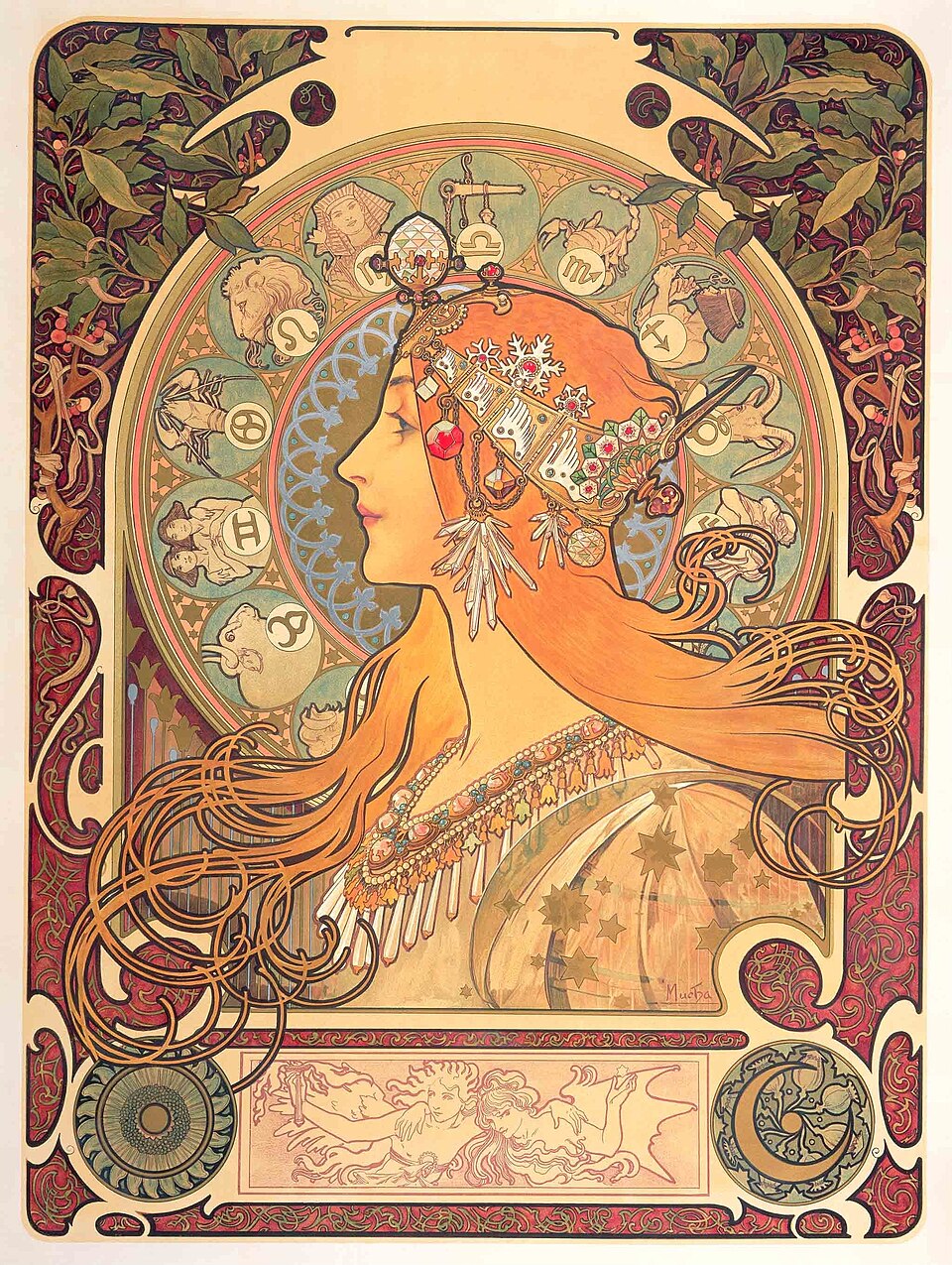
Study Mucha without turning him into a catch-all label
The Mucha Foundation documents Zodiac as an 1896 calendar design. Its disc contains the zodiac signs and frames the face. That specific context is more useful than calling every woman surrounded by flowers “Mucha”.
When studying a composition like this, separate the main figure, the frame and the decoration. Then ask what you could remove without losing the idea. This helps you build readable drawings instead of adding leaves simply to fill every gap.
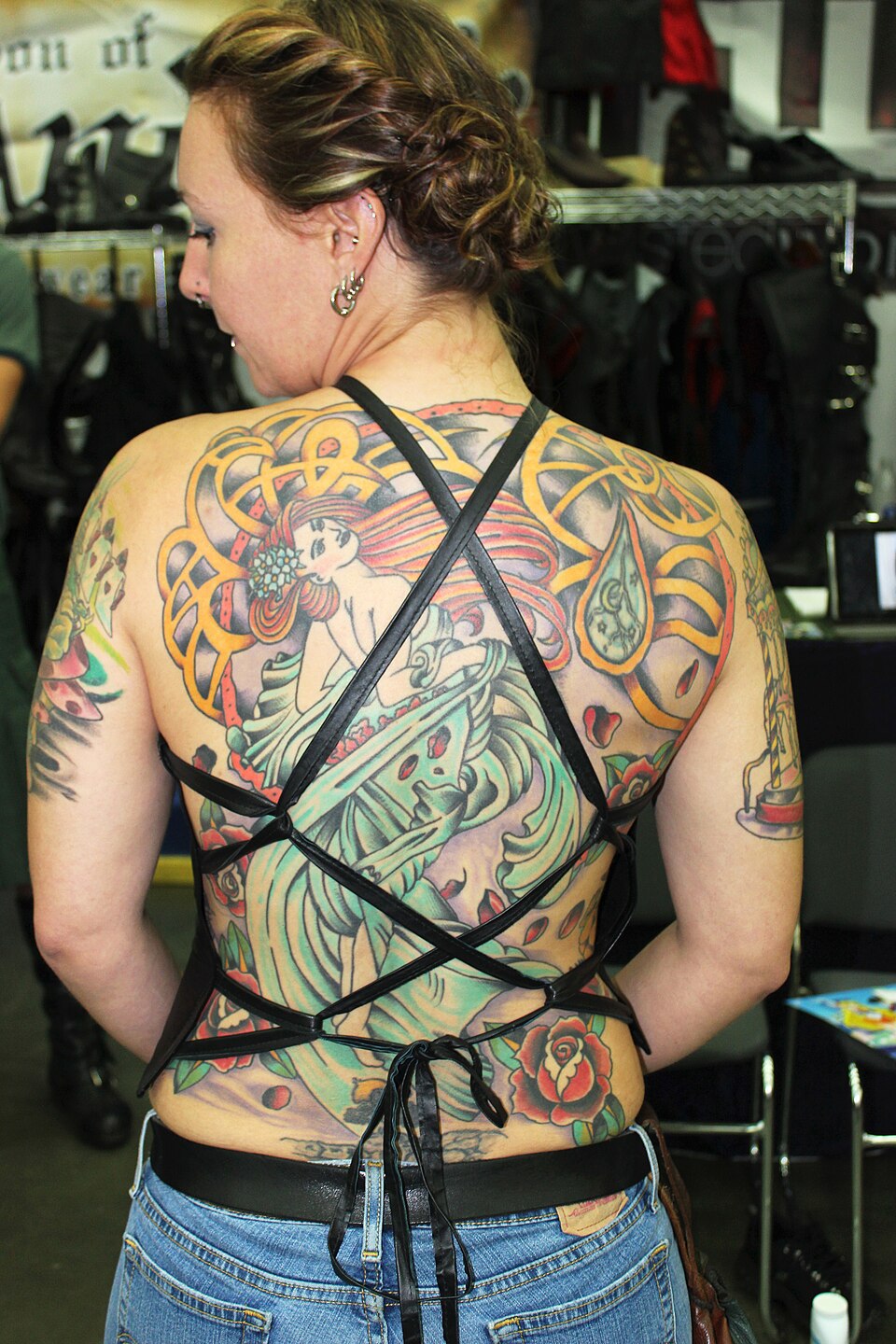
Study artists with a question in mind
Tattoodo’s selection includes Hannah Flowers, Antony Flemming and Deborah Cherrys. Use these names as starting points for exploring portfolios through the source, rather than as a list of people to imitate.
Choose three works by one artist and identify a recurring decision: how leaves are simplified, a profile is positioned or a background is separated. Write down the problem that decision solves. “I like it” is a beginning; “the quieter background makes the face stand out” gives you something to apply to your own drawing.
An exercise before switching on a machine
Work on paper and keep each version. The aim is to practise decisions, not to produce something ready for immediate tattooing.
- Draw your own subject as three small silhouettes without internal detail. Choose the clearest one.
- Make a version using only black and the paper. Check whether the main subject still leads.
- Introduce a limited palette and one accent colour. Do not use colour to hide a drawing problem.
- Add ornament one element at a time. Simplify anything that competes with the subject. Show the versions to your mentor and explain your choices.
What to take into your next drawing
You do not need a “neotraditional machine” to begin understanding the style. You need observation, drawing and comparison. A personal voice starts to emerge when you know why you chose a curve or removed an ornament; equipment comes later, as part of training and a specific need.
Sources and editorial notes
- Nina Palagonia · All about Neo-Trad
- Tattoodo · Neo-Traditional style guide
- OSCO · Neo traditional tattoos
- Mucha Foundation · Zodiac (1896)
- Fotografía / Photo: greyloch · CC BY-SA 2.0
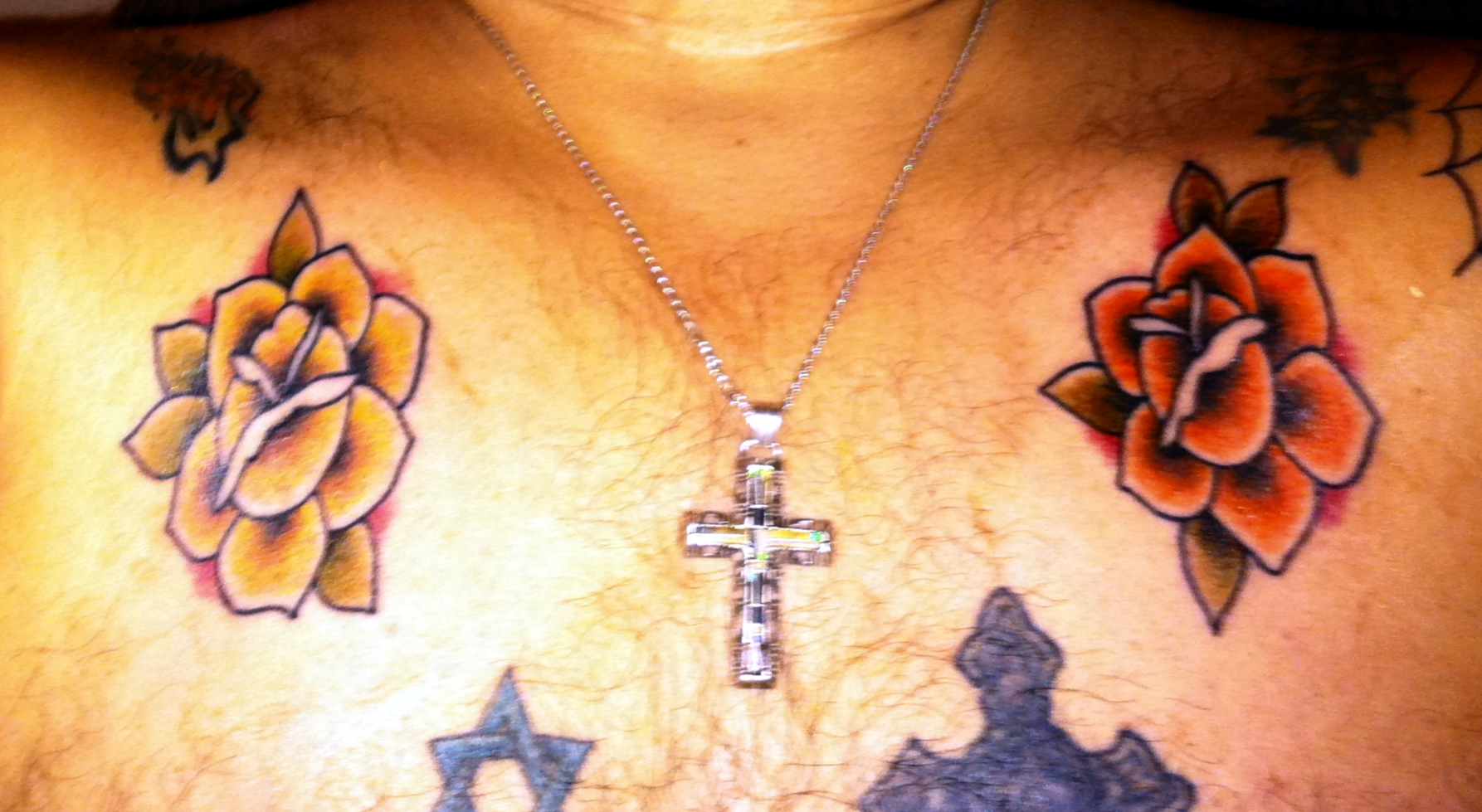
- Fotografía / Photo: Tony Alter; tattoo: Josh Shortridge · CC BY 2.0
- StevenWorthey · Neo-Traditional Tattoo Rose (2011) · CC BY-SA 3.0
Manufacturer and organiser facts are linked above. Our selection and reading advice expresses TattooXpert’s editorial judgement.
Our editorial methodKEEP EXPLORING.
Your first tattoo apprenticeship portfolio: what to show while you are still learning
Choose your drawings, show their development and prepare a clear introduction to a studio. A beginner's guide without inflated experience or pages added just to fill space.
TattoXpert
Blackwork: learning to draw the space you leave untouched
Black catches the eye; the space around it makes the composition work. Explore history, artists and four real photographs before taking those ideas into your sketchbook.
TattoXpert