
Your first flash sheet: six drawings that show your direction
Flash lets you think about a tattoo before making it. Study two historical sheets, then build your own coherent series with purpose and room to learn.
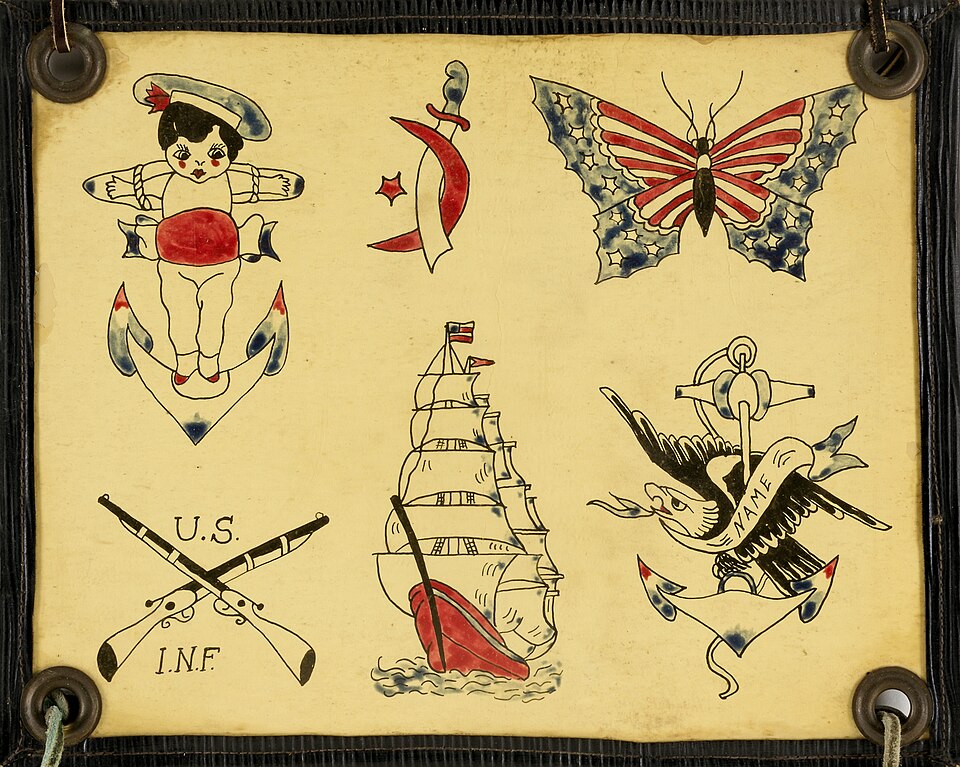
A sheet says more than six separate drawings
When you begin drawing for tattoos, filling a page can feel like the objective. A useful flash sheet asks for something more: individual designs with their own character that still look as though they belong together. A viewer should be able to pause on one motif without losing the sense of a collection.
We suggest six subjects as an exercise, not an industry rule. That is enough to compare line, black and colour choices without turning the practice into an endless collection. Decide what will unite the series before choosing the subjects.
A small archive of a travelling trade
South Street Seaport Museum’s Gus Wagner collection preserves flash, hand-tattooing tools, photographs and a scrapbook of roughly 400 pages. It documents his maritime travels from 1898 to 1902 and his later itinerant tattooing career. Drawings travelled as part of a trade, alongside its tools and stories.
The images here come from a different collection: two twentieth-century sheets held by Smithsonian American Art Museum and released as CC0. We do not attribute them to Wagner or assign a more precise date than their records provide.
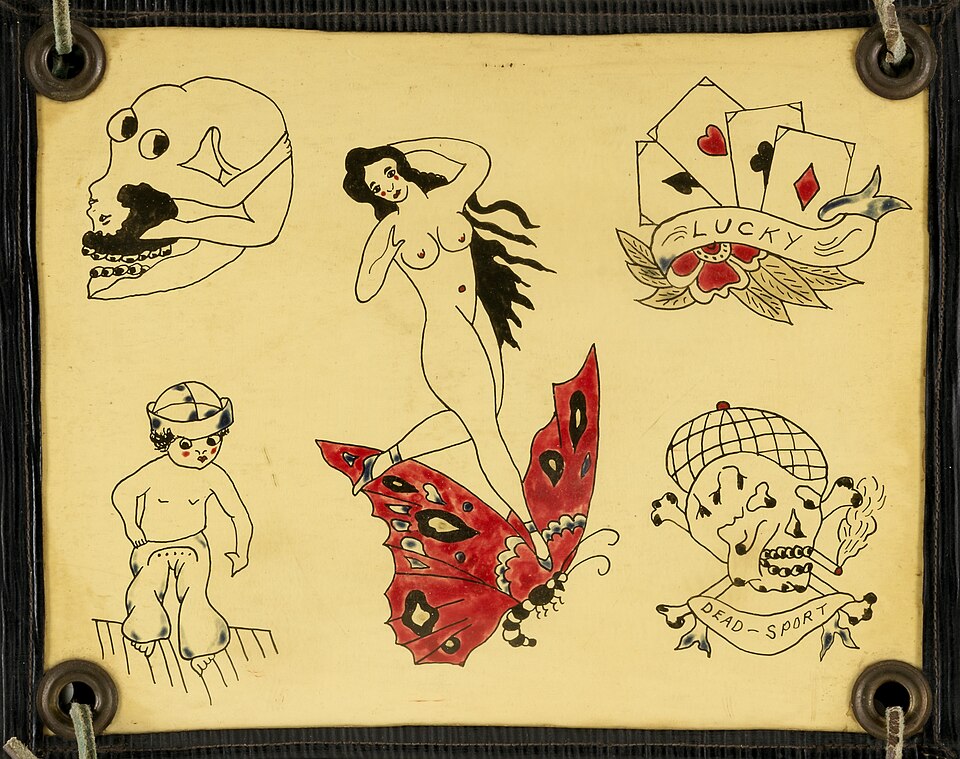
Give the exercise limits and direction
Choose a family of subjects you want to investigate: workshop objects, plants around you or small animals, for instance. Find references of the actual subject and note its recognisable features. Looking only at finished tattoos makes it easy to repeat decisions someone else has already made.
Then set two or three constraints: a limited palette, one dominant outline weight and a similar presentation size. The drawings do not need identical silhouettes. Consistency can come from how you handle shadows, curves or empty space.
From thumbnail to finished sheet
This sequence is for study and a drawing portfolio. Whether each design is suitable for tattooing is a separate question to work through with training and supervision.
- Make several thumbnails per subject, looking first for a clear silhouette.
- Choose six and arrange them before finishing. Keep an outer margin and consistent spacing.
- Resolve the black shapes before colour. View the page from a distance to spot an overpowering design.
- Give every design comparable care. One polished piece beside five rushed ones makes the series hard to assess.
- Photograph or scan the sheet and keep the sketches too. Add a date and a short note about what you learned.
Finding flash does not make it your design
Seeing a picture on a studio wall or online does not make it something you can present as your own. Keep track of your references and distinguish a clearly labelled study copy from an original portfolio proposal.
For these historical sheets, we provide the specific licence. For a contemporary artist’s work, check their terms. You can learn from a composition decision without reproducing the whole design.
When you move on to transfer study
The Phomemo M08F in our catalogue may become relevant later when studying stencils. Resolve the drawing first and check its product page for compatible paper and connection requirements. A printer cannot decide which lines the design needs.
What your first sheet should communicate
Rather than demonstrating six styles, aim to show six considered decisions. If you can explain why you simplified a leaf, separated two forms or limited a palette, the sheet is doing its job: turning practice into judgement.
Sources and editorial notes
- South Street Seaport Museum · Tattoo Collection
- Smithsonian American Art Museum · autor no identificado / artist unidentified · CC0
- Smithsonian American Art Museum · autor no identificado / artist unidentified · CC0
Manufacturer and organiser facts are linked above. Our selection and reading advice expresses TattooXpert’s editorial judgement.
Our editorial methodFROM THE PAGE
TO YOUR STUDIO.

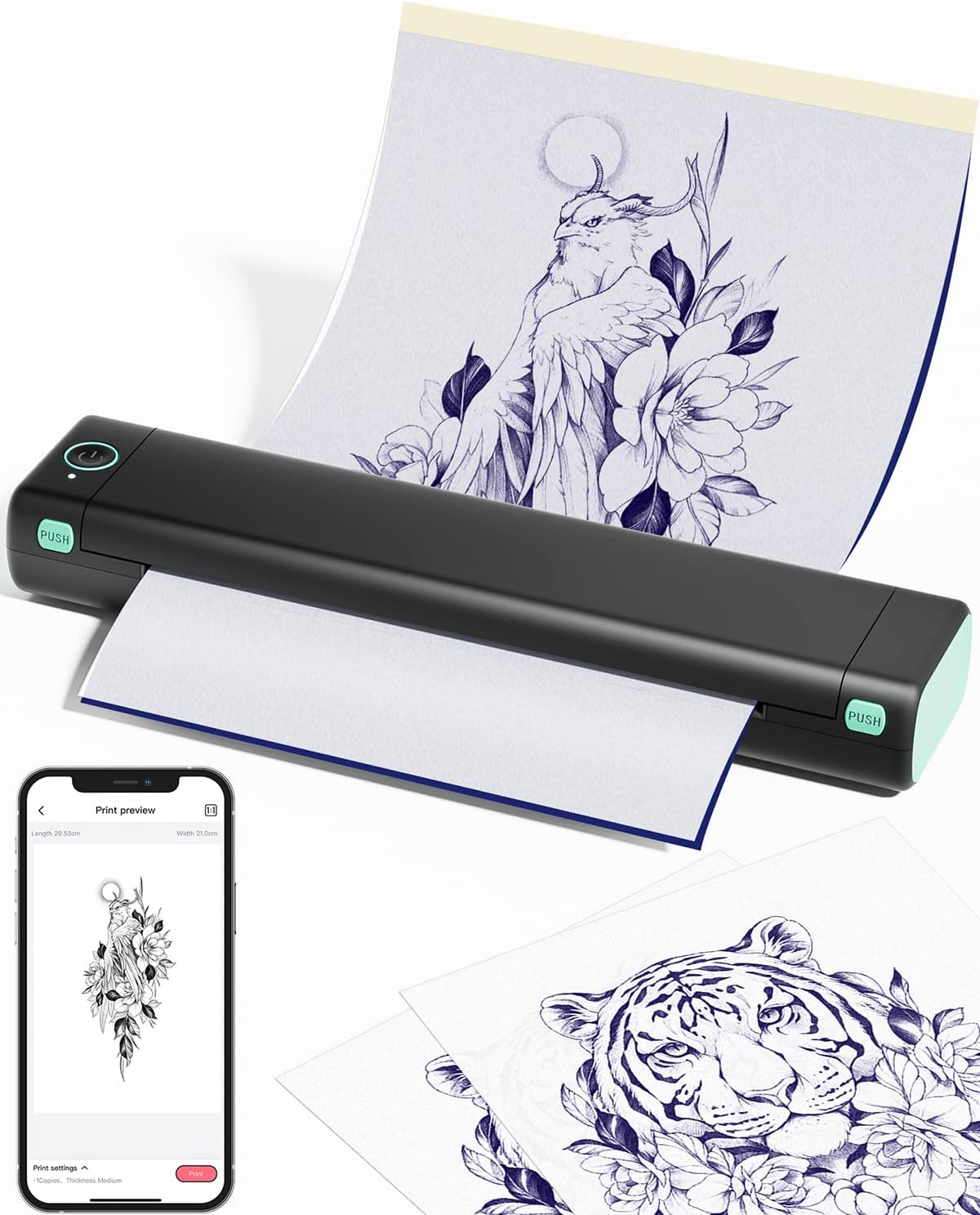
A Bluetooth thermal printer for transferring designs to stencil paper.
KEEP EXPLORING.
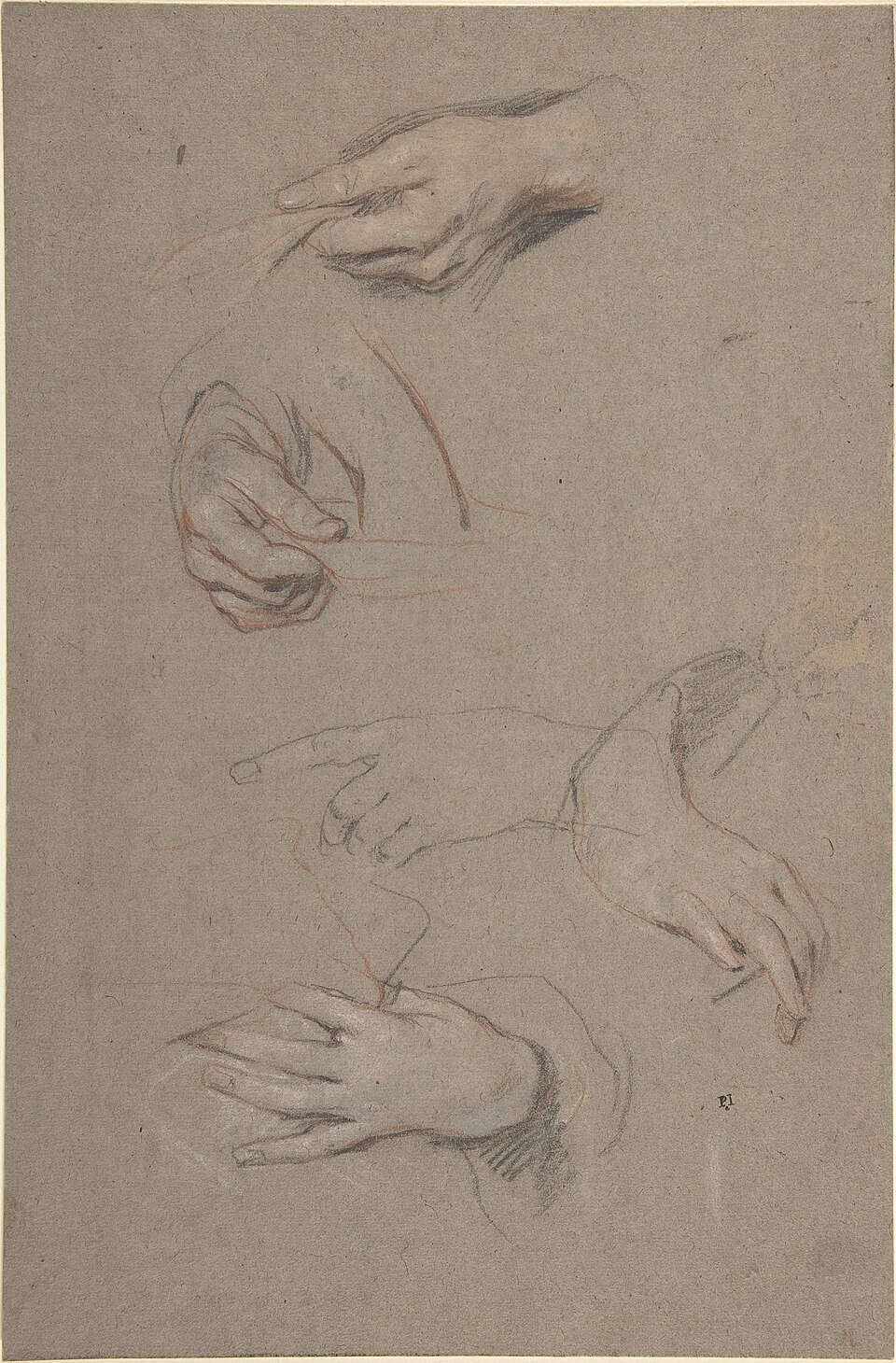
Your first tattoo apprenticeship portfolio: what to show while you are still learning
Choose your drawings, show their development and prepare a clear introduction to a studio. A beginner's guide without inflated experience or pages added just to fill space.
TattoXpert
Neotraditional tattooing: beyond pretty flowers and bold colour
Learning to draw neotraditional designs starts with more than choosing a subject. Explore its influences, study real artwork and try an exercise in line, hierarchy and colour.
TattoXpert