
Saving a thousand tattoos will not teach you to draw: build a useful reference library
A useful archive is more than an endless folder of screenshots. It is a collection of questions, sources and observations you can turn into your own drawing decisions.
Your inspiration folder needs judgement too
You open a folder to draw a butterfly and find two hundred pictures saved because you liked them. None records who made it, what interested you or where it came from. There is plenty of material and little guidance.
Changing that habit does not require a special app. It means saving fewer things with more information. Ask a simple question: what do I want to learn from this image? It might be an animal’s silhouette, the direction of a branch or how an illustrator separates two planes. Each question calls for a different reference.
Separate the subject, the interpretation and the tattoo
We suggest three groups. First, your own or authorised photographs of the subject you want to draw. Second, illustration, painting and design that interest you for their composition. Third, tattoos you want to study for their relationship with the body.
This makes it less tempting to ask one picture for every answer. A photograph may help with a flower’s structure, a poster with size hierarchy and a tattoo with placement. Your drawing does not need to inherit the exact silhouette of any of them.
A museum can be a useful starting point
The Met makes eligible public-domain artwork images available through its Open Access initiative under CC0. This offers references with a clear source. Check that the specific work is included: the policy does not automatically free every image on its website.
Collection records also provide an artist, date and materials. Keeping those details changes your relationship with the picture. Instead of an attractive image, you have a work you can investigate.
Learn to question an attractive reference
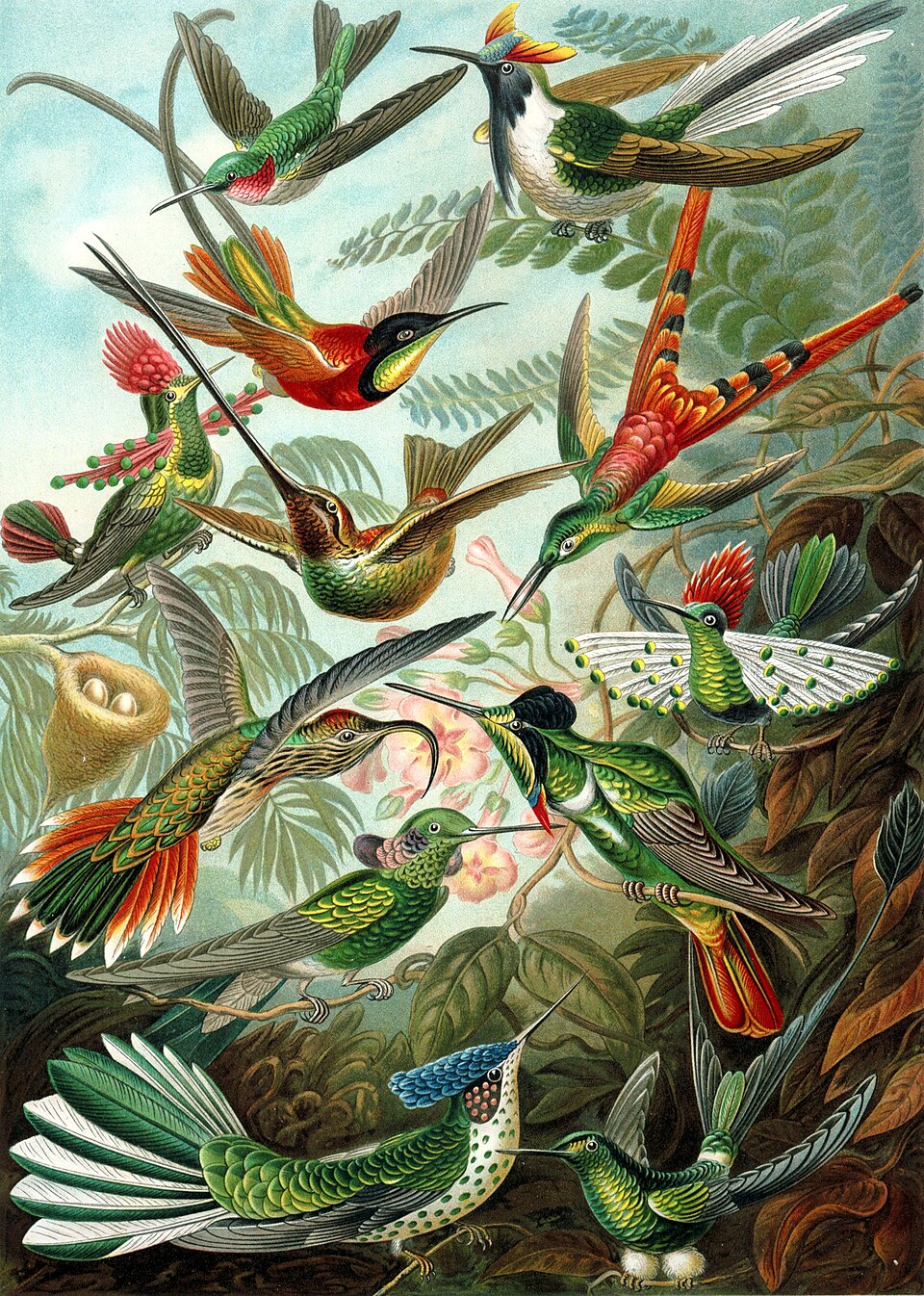
Ernst Haeckel’s hummingbird plate at the top comes from Kunstformen der Natur, published in 1904. Its record notes that the poses were drawn from prepared specimens and are not natural. That is a useful beginner’s lesson: a detailed illustration does not automatically explain how an animal moves.
Study its rhythms and contrasts, but seek photographs or specialist documentation when you need to understand a pose. Note what each reference is useful for and what it cannot establish. That note is worth more than ten extra screenshots.
A five-line record is enough
Use a notebook, spreadsheet or folder with text files. The important thing is being able to find the information later.
- Artist and title, when known. Do not substitute the account that reposted the image.
- Original source link and date consulted.
- Licence or permission: studying an image and publishing it are different uses.
- What I am observing: outline, texture, anatomy, palette or composition.
- What I will test in my own drawing and what needs another source.
Close the references before your final version
Try studying three different sources, writing three observations and making several thumbnails. Then close the pictures and develop a proposal from your notes. When you reopen them, check whether you understood an idea or repeated a recognisable composition too closely.
This is not a formula that guarantees originality. It makes your process visible and helps reveal dependencies. Keep the sketches: when you prepare an apprenticeship portfolio, explaining how you reached a solution will give the finished sheet context.
A good reference makes you think
If a picture is useful only as something to copy, you have not finished studying it. When you can explain the decision that interests you and apply it to a different problem, your archive becomes a drawing tool.
Sources and editorial notes
- The Metropolitan Museum of Art · Open Access
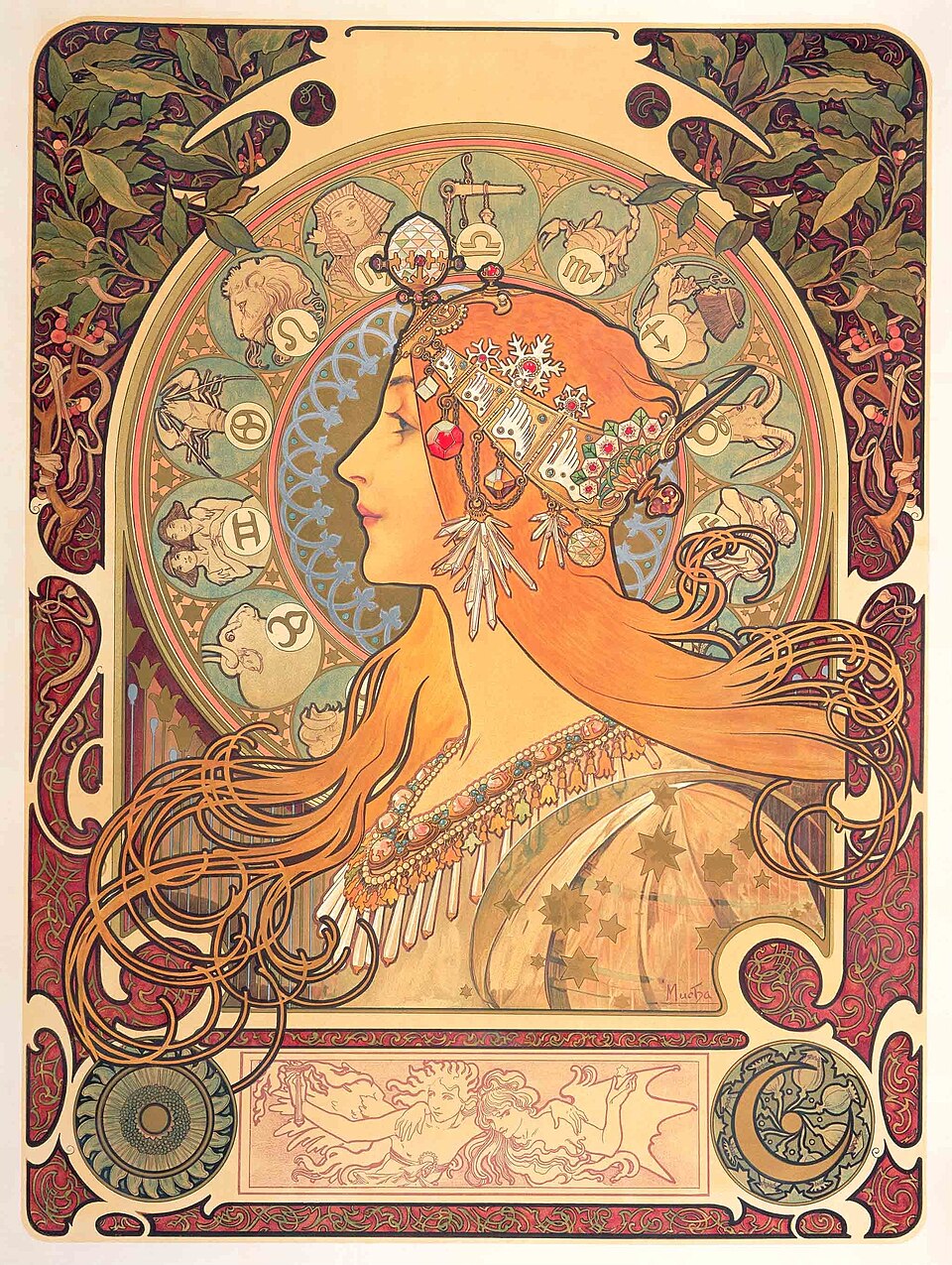
- Mucha Foundation · Zodiac (1896)
- Ernst Haeckel · Wikimedia Commons · Public domain
- Alphonse Mucha · Zodiac (1896) · Wikimedia Commons · Public domain
Manufacturer and organiser facts are linked above. Our selection and reading advice expresses TattooXpert’s editorial judgement.
Our editorial methodKEEP EXPLORING.
Neotraditional tattooing: beyond pretty flowers and bold colour
Learning to draw neotraditional designs starts with more than choosing a subject. Explore its influences, study real artwork and try an exercise in line, hierarchy and colour.
TattoXpert
Phone tattoo photography: show the work, not the filter
A useful photograph shows the whole design, preserves its colour and explains its placement. Build a simple routine for documenting your progress without disguising the result.
TattoXpert