
Beyond “looks good”: how to ask for feedback that improves your drawings
Specific questions, a rose in three variations and a short exercise for using critique without losing your own intention. A practical guide for people learning to draw for tattooing.
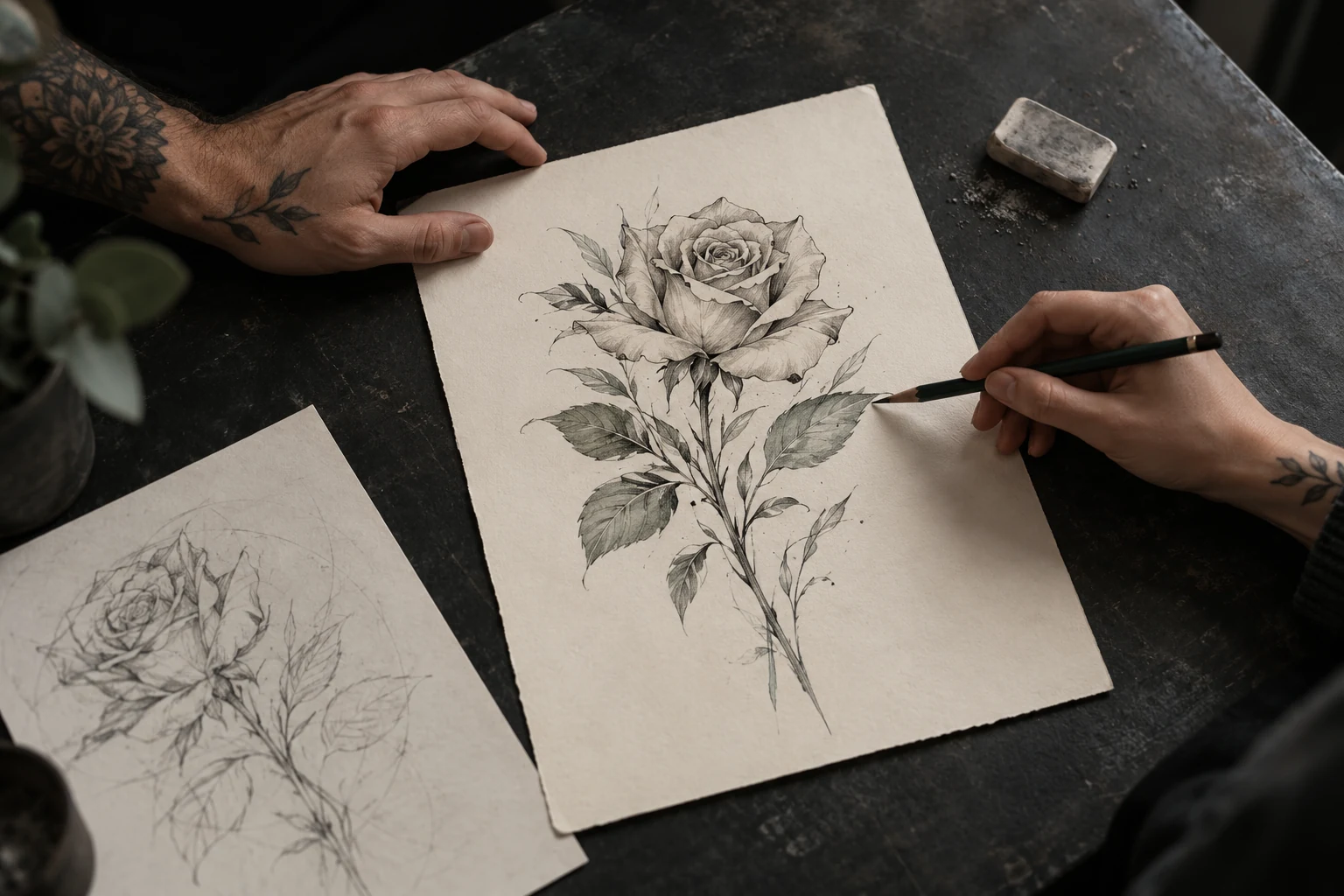
You have shown the drawing. What happens next?
You have spent an afternoon drawing a rose. Someone says “looks good”, and you return to your sketchbook with exactly the same question: why do the leaves seem to carry more weight than the flower? The compliment feels encouraging, but offers little direction.
Asking for feedback is something you can practise alongside drawing for tattooing. Try bringing a question that lets someone point to a specific part of the page. You do not need them to redesign the work. You need to understand what they see, then decide what to do with that information.
Describe before you judge
The Kennedy Center separates description, analysis, interpretation and evaluation when discussing artwork. Looking comes first; explaining the arrangement and its effect follows. A judgement then has reasons behind it, rather than starting the conversation with a score.
That framework comes from arts education. We are adapting it to drawing for tattooing, not treating it as a technical assessment of a tattoo on skin.
Ask first and keep the review focused
If you want a tattoo artist to look at your work, ask whether they have time and how they prefer to receive it. An agreed review deserves more care than sending a whole folder in a message and expecting an immediate reply.
Bring one piece, explain your intention and raise one question. For example: “I wanted the flower to read first. Where does your eye go?” Show the complete drawing and the size you are exploring. Then allow a few moments for the other person to look.
Turn a vague question into a useful conversation
These are prompts for discussing a drawing. None has a predetermined correct answer.
| What to check | A question with little direction | A question that points somewhere |
|---|---|---|
| Hierarchy | Do you like it? | What do you notice first, and what draws you there? |
| Clarity | Does it look odd? | Where is it difficult to tell one shape from another? |
| Intention | Would you do it differently? | I want a calmer feeling. Which element interrupts it? |
| Next step | What should I change? | If I revised just one area, which would help answer this question? |
An opinion needs something to stand on
In a separate guide, the Kennedy Center recommends open questions and asks people to support their responses with elements of the artwork. Liking something can begin a discussion; explaining the role of line, colour or balance helps it continue.
One rose, three different decisions
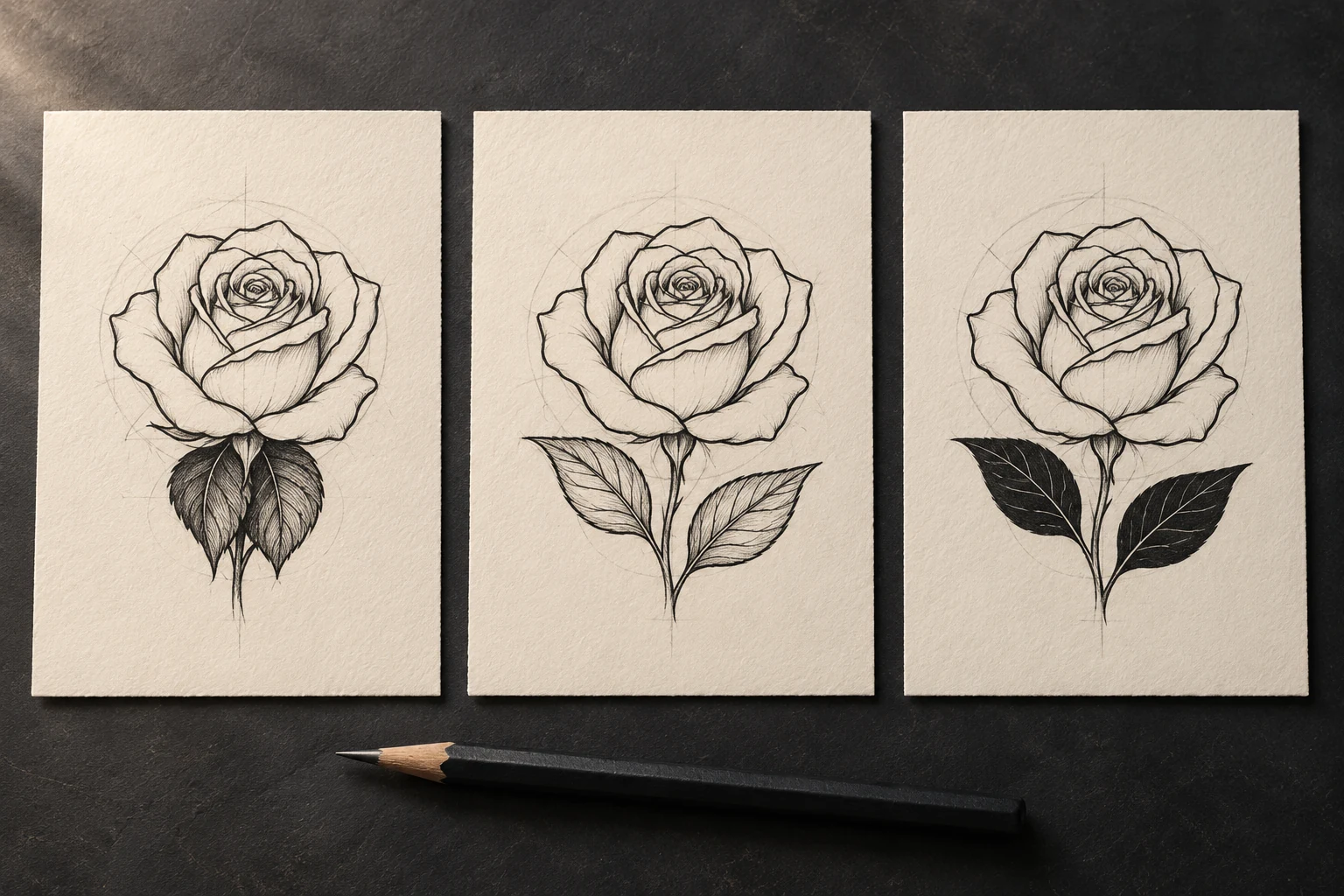
Listen first, then try something
Activities from Cornell’s Johnson Museum allow time for individual observation before sharing impressions. Their prompts also distinguish what is visible from the interpretation we bring to it. That pause gives people something to discuss.
You do not have to accept every change
Write down the observation before defending your drawing. If someone says “the leaves overpower the flower”, ask where that happens. Then separate the observation from the proposed fix: making a leaf smaller is one option; moving it may be another.
When two people disagree, return to your intention. One may be judging delicacy while the other values contrast. Try both suggestions in small copies and keep the one that best addresses your question. Save the original so you can actually compare what changed.
A short exercise for your next drawing session
Choose an original drawing that still leaves you with a question. Finish the session with a specific experiment, rather than an endless list of adjustments.
- Write down what should stand out and one question about that aim.
- Ask for an observation about a specific area of the drawing.
- Make two small variations, changing one decision at a time.
- Compare them at the same size and note what you learned.
- Keep the date and the question you want to revisit next.
Useful critique takes you back to the page
The aim is not to collect approval. It is to leave the conversation knowing what you will try. Today that might mean separating two leaves; tomorrow, strengthening a silhouette. One small, visible decision is enough to move a drawing forward.
Sources and editorial notes
- Kennedy Center · Teaching Students to Critique
- Kennedy Center · Art Critiques Made Easy
- Johnson Museum, Cornell · Worksheets and prompts for visual analysis
Manufacturer and organiser facts are linked above. Our selection and reading advice expresses TattooXpert’s editorial judgement.
Our editorial methodKEEP EXPLORING.
Your first tattoo apprenticeship portfolio: what to show while you are still learning
Choose your drawings, show their development and prepare a clear introduction to a studio. A beginner's guide without inflated experience or pages added just to fill space.
TattoXpert
Dragons on paper: the prints that help explain Japanese tattooing
From Water Margin heroes to kabuki actors: two Kunisada prints offer cultural context for Japanese tattooing and a practical lesson in drawing around the body.
TattoXpert