
Why does tattoo ink spread? Understanding blowout and skin layers
A halo outside a tattoo line is not the same as healing or gradual ageing. Learn what blowout means, where pigment sits and what to observe before drawing conclusions.
The shadow that was never part of the design
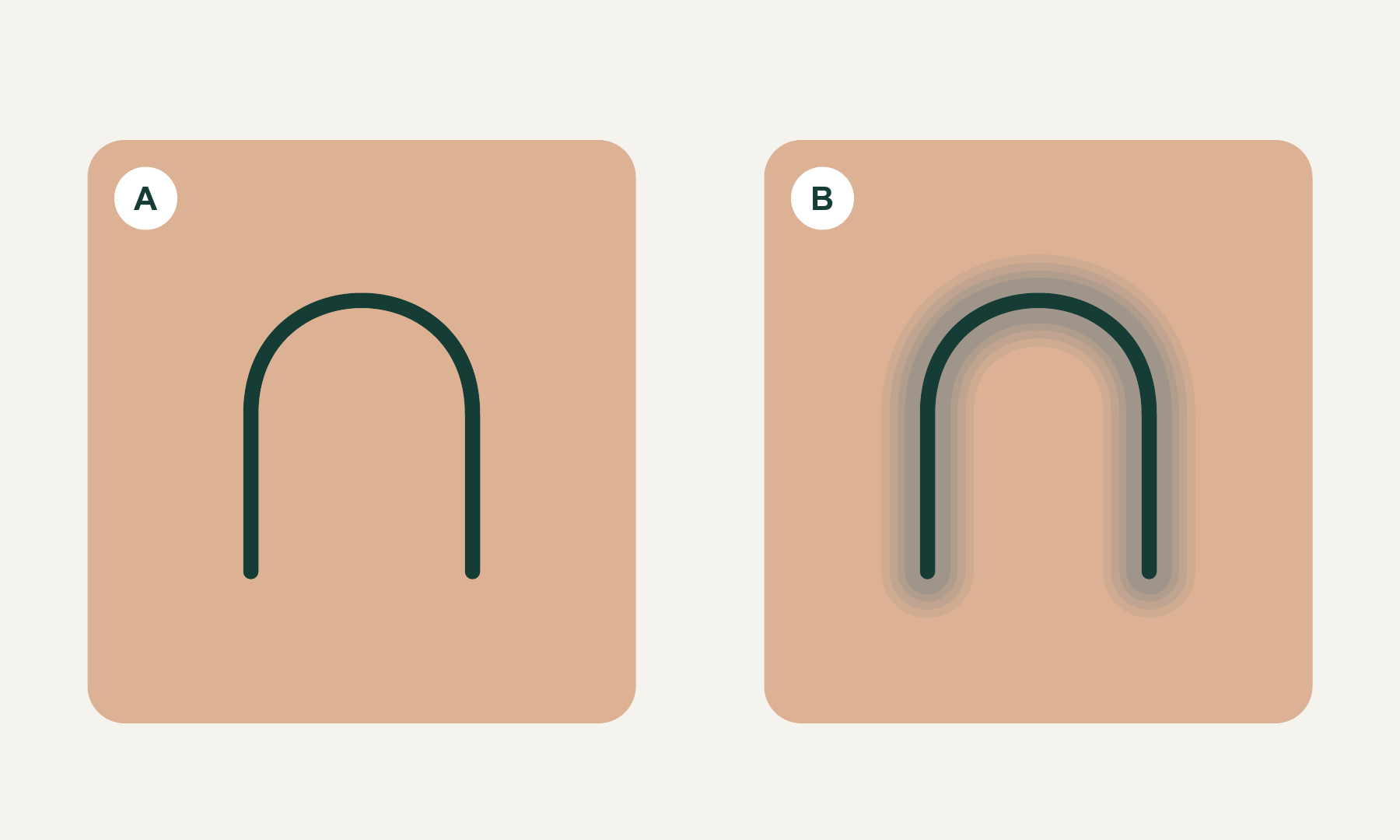
You look closely at a tattoo line and notice a shadow extending beyond it. The question matters: has pigment spread beneath the skin, or are you seeing a change associated with healing? Tattoo blowout describes unwanted pigment dispersion beyond the intended tattoo border. It can create a blurred halo, rather like a shadow behind the line.
One documented explanation is excessively deep pigment placement involving the subcutaneous tissue. However, a photograph alone cannot reconstruct what happened or establish a single cause for every mark. For a beginner, the useful starting point is anatomy, the distinction between observation and assumption, and knowing when to seek an assessment. This guide explains those concepts; it does not prescribe machine settings or working depths.
What does ink spreading actually mean?
The ink is not growing. What changes is the distribution of pigment relative to the intended design. In our cover illustration, A shows a defined outline and B adds a halo around it. These are original diagrams, not photographs of a tattoo changing over time and not a diagnostic template.
Clinical accounts often describe a blurred or blue-toned appearance. The entire design does not have to lose its lines: a visible outline may remain with an unintended area of colour around it. Equally, every tattoo that looks less sharp should not automatically be called a blowout. When the change appeared, where it lies and how it develops all matter.
Epidermis, dermis and subcutaneous tissue: where pigment belongs
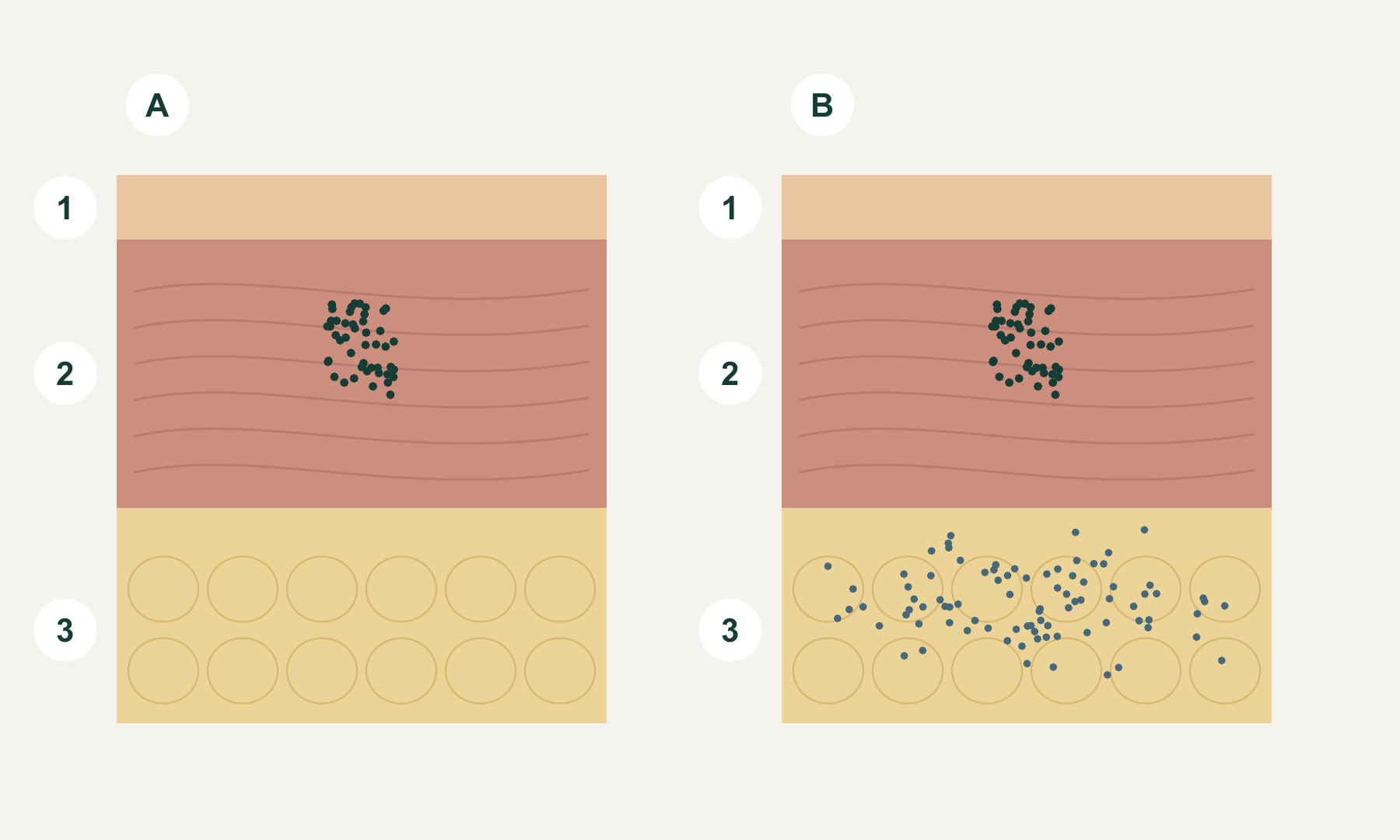
The epidermis is the outer layer, which continually renews itself. Beneath it lies the dermis, a tissue containing fibres, blood vessels and nerves. Further down is the subcutaneous tissue, also called the hypodermis, containing fat and connective tissue. These distinctions explain why drawing on a surface and placing pigment within skin are fundamentally different activities.
Permanent tattoo pigment is deposited in the dermis. The subcutaneous tissue is not an extra working layer to reach so that colour will hold better. Its involvement in some cases of pigment dispersion is a reason to understand tissue boundaries, not to push beyond them.
Do not read a skin diagram as a set of operating instructions. The layers are simplified, the dots stand for pigment, and there is no scale. A depth quoted online cannot describe every person's anatomy or every body site.
Lasting does not mean biologically motionless
Skin is living tissue, not laminated paper. Research by Inserm and collaborators used mice to study how dermal macrophages capture pigment and how replacement cells can recapture it after release. It helps explain tattoo persistence as a biological process. It does not establish the cause of a particular human blowout.
Two pigment distributions in cross-section
Why the body site matters
Skin thickness varies between body regions and individuals. Blowout literature includes cases involving thin skin, such as the top of the foot. That does not turn a body map into a table of safe depths, or make an apparently thicker area a place where attention is optional.
For an apprentice, the practical implication is to discuss assessment of the site with a mentor instead of copying settings demonstrated on a different person. Thickness, mobility and elasticity are not interchangeable terms. Saying that skin moves more in one location records an observation. Deciding that this means going deeper adds a conclusion the observation does not support.
Blowout, healing and ageing are different questions
This comparison helps organise the concepts; it is not a diagnostic test. An isolated colour change is not enough to determine what is happening.
| What to check | What it describes | What it cannot establish |
|---|---|---|
| Blowout | Pigment extending beyond the intended borders; the classic pattern becomes apparent soon after tattooing. | A photograph cannot reveal the exact depth, reconstruct the movement or assign blame. |
| Healing | Skin can show temporary changes, including some redness, swelling or flaking. | A recent tattoo does not make every worsening symptom a normal part of healing. |
| Ageing | Definition can gradually change over years, which differs from an early halo. | Not every late-observed spread has the same explanation; atypical cases also exist. |
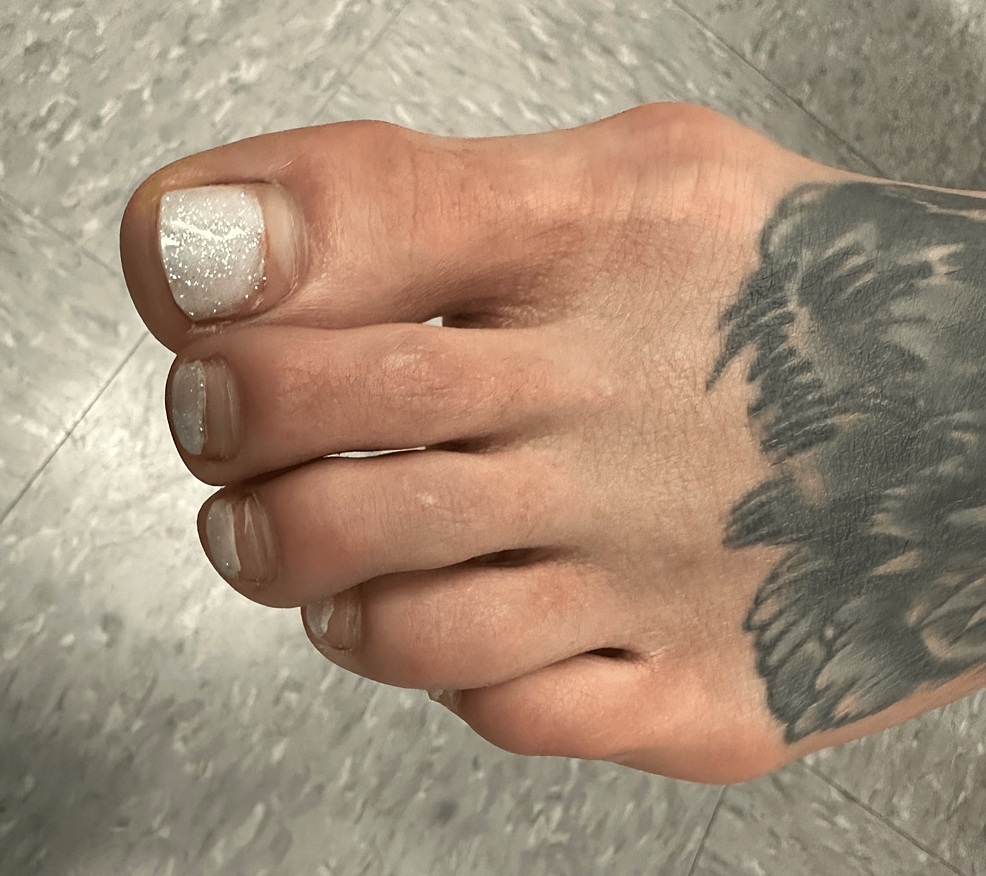
A real photograph of an atypical, delayed case
What this image can teach you
The authors discuss possible mechanisms without establishing a definitive cause. A gravitational hypothesis should not become a blanket claim that tattoo ink always travels downwards. An observation in one person does not establish a rule for all tattoos.
A useful review before blaming the equipment
Our learning approach is to separate what you can record from what requires advice. Bring specific information to your mentor and, where skin health is a concern, to a healthcare professional. A short record is more useful than changing several settings and later trying to remember what happened.
Photograph tattoos without distorting the result
- Record when the tattoo was made, when the change was noticed and whether it is increasing, decreasing or staying the same. Distinguish confirmed dates from approximate recollections.
- Describe the location precisely: within a line, next to an edge or outside the design. Begin with observations rather than a diagnosis.
- With the person's permission, keep unfiltered photographs under comparable lighting, at a similar distance and in a similar position. Do not boost contrast to make a difference look more dramatic.
- Keep the actual material and session details that belong in the studio record. Do not reconstruct unrecorded settings from guesswork.
- Discuss what is visible and what remains unexplained with your mentor. An image does not automatically identify a faulty cartridge or prove that buying another machine will solve the problem.
Going over it again is not an automatic answer
An unclear edge can tempt you to thicken the line until it looks even. In our editorial view, that should not be the default response to a change you do not yet understand. Adding pigment alters the design; it does not establish what caused the halo or assess the condition of the skin.
Promising that a cream will move pigment back into place or recommending corrective work from a photograph is not a useful shortcut either. Options for a persistent change require assessment of the individual case. We do not offer treatment protocols, universal retouching timelines or guaranteed outcomes. Learning to read cartridge specifications and photograph work faithfully can help you ask better questions, not diagnose a skin change.
When the concern is more than appearance
Seek medical care promptly if redness spreads, pain worsens, pus appears or there is fever. Do not dismiss these symptoms as a simple blowout or wait for healing to finish before seeking advice. Absence of pain alone does not establish what a mark is.
What to take to your next mentor discussion
You can begin without working on skin: draw three layers, place pigment in the dermis and separately represent a deeper dispersion. Then explain what the diagram shows and what it cannot reveal about an actual person. Making that distinction is already a useful improvement in how you read tattoo images.
Sources and editorial notes
- Nicolas Kluger — Blurry halos around tattoos (2013/2014)
- Cao et al. — An Atypical Migration Pattern of Tattoo Pigment (2023)
- IQWiG / InformedHealth — How does skin work? (2025)
- Inserm — Tattoos: are they really indelible? (2018)
- American Academy of Dermatology — Tattoo skin reactions
Manufacturer and organiser facts are linked above. Our selection and reading advice expresses TattooXpert’s editorial judgement.
Our editorial methodKEEP EXPLORING.

How to photograph tattoos with your phone without altering the result
Photograph tattoos with your phone: organise the light, check reflections and framing, and keep colour faithful without altering the work.
TattooXpert
Tattoo needle types: how to read RL, RS and Magnum
Learn to read RL, RS and Magnum, distinguish diameter from taper and compare tattoo cartridge specifications clearly.
TattooXpert