
Why two 3RL cartridges differ: needle diameter and taper explained
The needle count can stay the same while the point changes. Compare diameter and taper separately with diagrams and catalogue examples, without treating dimensions as promises about skin.
What the short name leaves out
You used one 3RL cartridge for a practice exercise and found another box with the same letters. Is it the same needle? Not necessarily. 3RL identifies three needles in a Round Liner grouping, but it leaves out part of their geometry. The diameter of each pin and the length of its tapered point can differ.
The useful question is what changes between those two references. We will separate two comparisons: keeping three pins and changing their diameter, then keeping the diameter and changing the taper. The aim is to understand the tool before attributing a result to it, rather than declare a winner or prescribe a tattooing setup.
If liner, shader and magnum are still unfamiliar, the journal’s general needle guide explains those families. This article looks more closely at differences within liners.
Three counts pins; 0.25 mm measures one pin
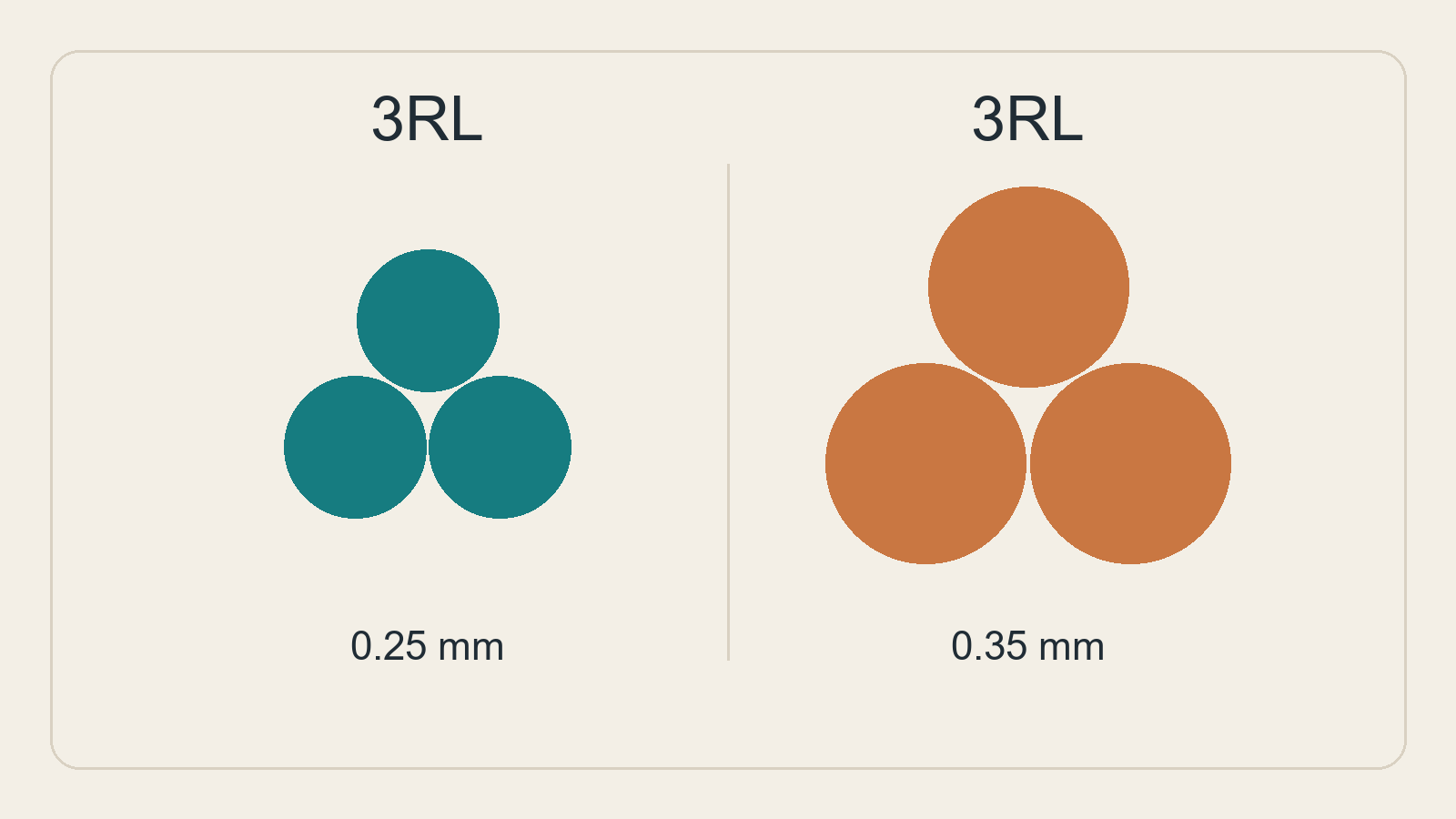
Imagine looking at the end of a small bundle. You can count three elements and still draw each one narrower or wider. Changing their thickness does not turn the grouping into a five: count and diameter answer different questions.
In the cover diagram, each circle represents a cross-section through the body of one pin. Both groups contain three circles, but their diameters differ. Spacing is illustrative and does not reproduce a commercial soldered grouping. These are not three drops of ink or three marks that must appear on skin.
That distinction prevents a misleading calculation: multiplying 0.25 by three does not give the width of a tattooed line. Adding diameters as though the pins were all in one straight row would already misdescribe this triangular diagram. Turning that sum into a prediction about skin introduces another unsupported leap.
Taper begins where the pin narrows
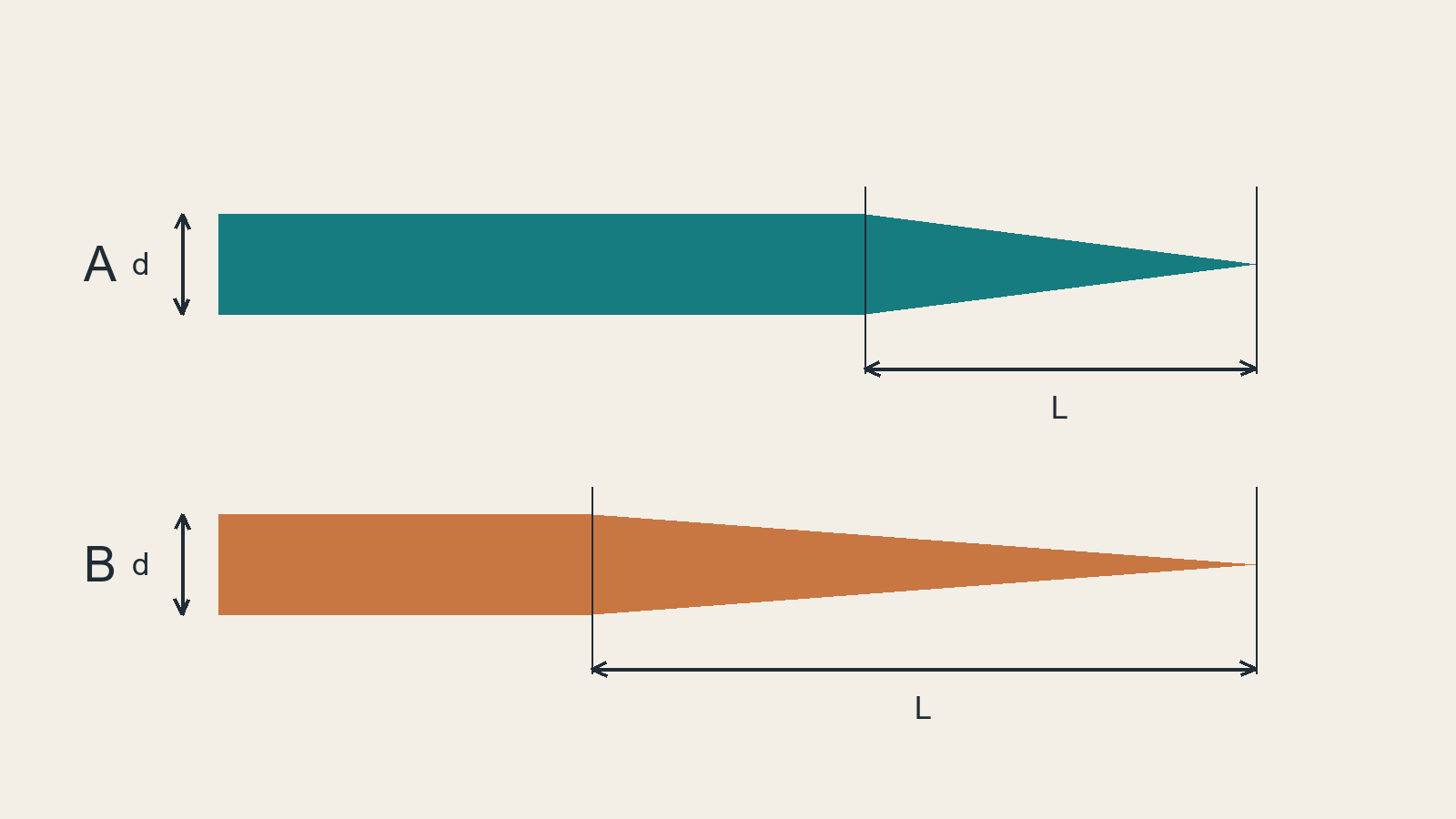
Taper is the section that narrows towards the end of each needle. To understand it, change your viewpoint: stop looking at the grouping end-on and look at one pin from the side. Diameter is measured across its body; taper length runs along the direction of the point.
In a simplified drawing with an unchanged diameter, a longer taper produces a more elongated profile. It does not add needles to the grouping. Nor does it describe how far the assembly projects beyond the cartridge housing or how far it enters skin. Those are different concepts, even when their measurements all use millimetres.
Do not use taper length as an insertion reference. Metal geometry is not an operating instruction. If these dimensions have become mixed together in your notes, separate them before interpreting a practice exercise.
Two profiles with the same diameter
Two real comparisons within one range
Cheyenne’s Safety Cartridges configuration chart contains the pairs below. The first retains the slt designation while changing diameter; the second retains 0.35 mm while changing mt to slt. In that document’s legend, mt means Medium Taper and slt means Super Long Taper.
These compare declared catalogue fields; they are not tests proving that every other manufacturing detail is identical.
| What to check | First reference | Second reference |
|---|---|---|
| Only declared diameter changes | 3 liner 0.25 slt | 3 liner 0.35 slt |
| Only taper category changes | 3 liner 0.35 mt | 3 liner 0.35 slt |
A taper name needs its product family
Do not turn Long Taper into a universal number. Peak’s documentation lists taper lengths by product line, assigning different lengths to the Long Taper name in different families. That gives you a concrete reason to keep the brand and range alongside any measurement you record.
Diameter notation can change too. Kwadron uses 35/3RLMT: in this reference, 35 means 0.35 mm, 3 is the pin count and MT identifies medium taper. The specific product page confirms those attributes. Learning to unpack that example is useful; assuming every string of numbers follows exactly the same system is not.
When a shop omits taper, the answer is that the information is missing. Do not infer it from a picture, the housing colour or another variant sharing the product page. A missing specification remains a question for the supplier.
Which one will make the finer line?
Two product names alone cannot promise a final line width. Comparing geometry is different from testing an outcome. Manufacturers may describe intended uses or expected advantages; those remain manufacturer statements, not a tattooing session conducted by TattooXpert.
If the references change diameter, taper and product family at the same time, an observed difference cannot identify one cause on its own. It is like comparing two drawings made with different tools, paper and scales, then attributing everything to the pencil.
A more precise question is: which feature changed, and what can I actually record? “This reference has a different declared diameter” is a checkable statement. “It therefore always produces this particular line” requires evidence that the label does not provide. Keep the description and the prediction separate.
A comparison exercise without opening cartridges
Draw three cards on a sheet of paper. On each, record the manufacturer, range, count, diameter and taper of a documented reference. Choose them so that one pair changes only the stated diameter and another changes only the taper category. You do not need to purchase equipment to complete this exercise.
Circle the matching fields and underline the one that changes. Then draw an end view to explain diameter and a side view to explain taper. If you cannot show the difference without changing other features, revisit the cards: you may not be comparing what you thought.
Under each pair, complete two sentences: “Here I am comparing…” and “This does not let me conclude…”. You can identify a different point profile without assigning it an insertion depth or guaranteeing a healed result. Keep the source and access date with the cards so that someone else can reconstruct your comparison.
Keep the context if you later compare practice work
An exercise with your mentor can take that question further, but first agree on what you want to observe. Do not change several decisions at once and then call the result a taper test. Record the complete cartridge reference and which conditions stayed constant or changed; if something is unknown, say so.
A sample on synthetic practice skin describes that exercise and that material. It does not establish how a person will respond or justify transferring settings directly. A photograph of a line is not, by itself, a precise measurement of the needle’s geometry either.
Comparison is useful when it helps separate what you know, what you observed and what still needs an answer. Those distinctions make a conversation with your mentor more specific and easier to follow up.
The question worth keeping
When two boxes say 3RL, ask: same diameter, same taper and same product family? If one answer changes, you have a difference to investigate. Understanding it helps you choose deliberately and describe your learning without expecting an abbreviation to explain an entire tattoo.
Sources and editorial notes
- Kwadron · Cartridge System A–Z
- Peak · Needle taper and diameter
- Cheyenne · Safety Cartridges configuration overview
- Peak · Needle labels by product line
- Kwadron · 35/3RLMT specification
Manufacturer and organiser facts are linked above. Our selection and reading advice expresses TattooXpert’s editorial judgement.
Our editorial methodKEEP EXPLORING.
Tattoo needle types: how to read RL, RS and Magnum
Learn to read RL, RS and Magnum, distinguish diameter from taper and compare tattoo cartridge specifications clearly.
TattooXpert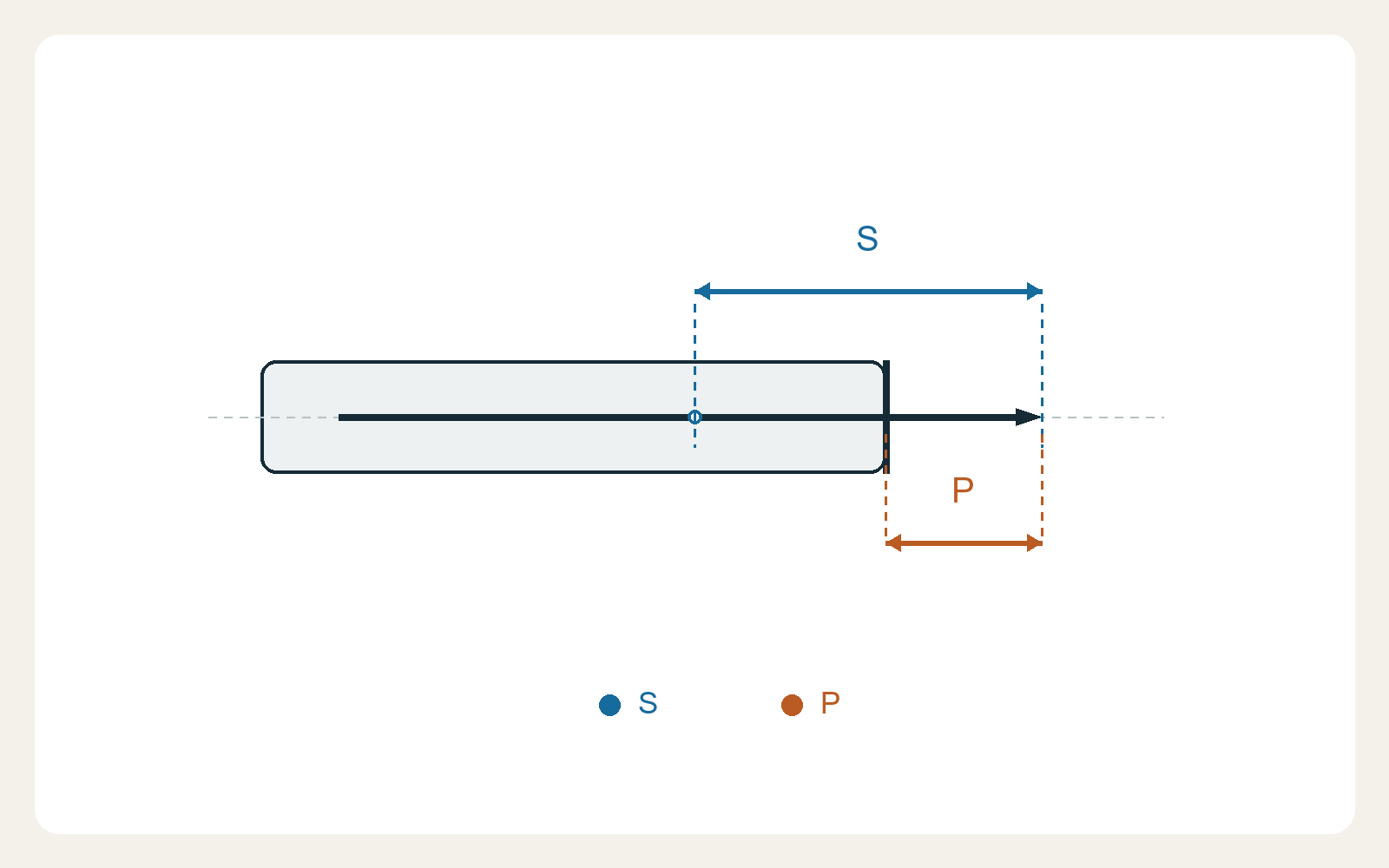
Tattoo stroke, needle hang and depth: three measurements to keep separate
Machine travel, the needle tip outside a cartridge and penetration into skin use different reference points. Here is how to read them without turning a specification into a depth prescription.
TattooXpert