
Ötzi’s 61 tattoos: what the skin reveals and what remains uncertain
Lines, crosses and an investigation that is still open. What Ötzi’s tattoos tell us about tattoo history, and how to separate a recorded mark from an interpretation.

An ancient line does not come with its meaning attached
You see dark lines on a mummy’s skin and wonder why somebody put them there. With Ötzi, the answer starts with a distinction. Researchers have documented 61 tattoos consisting of lines and crosses, but the meaning of each mark and the full details of their creation remain uncertain.
They are among the oldest direct evidence of tattooing preserved on a human body. Their value goes beyond a record: they allow researchers to examine actual markings from around 5,300 years ago and revisit interpretations as images improve and questions change. The tattoo count is documented. A single explanation for all of the marks remains an open question.
A discovery first mistaken for a mountaineering accident
On 19 September 1991, Erika and Helmut Simon found a body while hiking near the Tisenjoch, also known as Giogo di Tisa, in the Alps. Initially, it was thought to be the victim of a mountaineering accident. Recovery began before the archaeological significance of the discovery was fully understood.
The South Tyrol Museum of Archaeology’s account places archaeologist Konrad Spindler’s involvement on 24 September. He then estimated that the body was at least 4,000 years old; subsequent research refined its age. Since 1998, the mummy has been kept in a refrigerated cell at the museum in Bolzano.
That context matters when looking at photographs. They show a body preserved for millennia and examined under special conservation conditions. They do not show what the tattoos looked like on the day they were made.
What those 61 markings actually are
Do not picture 61 separate figurative scenes across the body. EURAC’s account of the 2015 survey describes lines, often parallel, and two crosses. Many markings are on the lower back and legs; the museum also lists the wrist and ribcage area.
The figure counts recorded markings. It does not, by itself, tell us how many sessions took place, how many people were involved or what the groupings were called within their community. Nor do we have a contemporary design catalogue linking every shape to a known intention.
A cross and a group of strokes are visual descriptions. Turning them into “protection”, “rank” or “treatment” requires an additional argument, beyond recognising a familiar shape. That distinction matters even when a proposed explanation sounds convincing.
In 2015, better photographs made a better inventory possible
Marco Samadelli’s team mapped the tattoos using multispectral photography. According to EURAC’s release of 27 January 2015, the body was photographed from different angles and at different wavelengths, from infrared to ultraviolet. This helped reveal marks that were difficult to identify with the naked eye against the darkened skin.
The research, published in Journal of Cultural Heritage, documented 61 marks and identified a previously unknown group on the lower right side of the ribcage. New tattoos had not appeared on the body: the researchers’ ability to record them had improved.
The location of this group also reopened questions about purpose. It is a useful reminder that an inventory is more than administrative work. A change in what can be observed can change which explanation looks plausible.
There is a step between recording and interpreting

How they were made cannot be settled by intuition
The museum’s page describes the incision-and-charcoal hypothesis. However, the study by Aaron Deter-Wolf and colleagues, published online on 13 March 2024 in European Journal of Archaeology, specifically sets out to reassess claims about tools and methods.
Its abstract explains that experimental research is compared with the physical characteristics of Ötzi’s marks, placing the case within tattoo traditions that predate electricity. The authors describe developing informed hypotheses, rather than directly observing the original procedure.
A historical explanation of technique therefore needs a source and a date. The apparent simplicity of a few lines cannot, on its own, identify the tool used or the skill of the person who made them. Looking familiar is not the same as having a documented method.
A therapeutic hypothesis is not an established function
One familiar interpretation suggests that some marks may have been associated with attempts to relieve discomfort. The museum discusses this possibility by relating tattoo locations to areas of bodily wear. EURAC’s 2015 release, meanwhile, stresses that the newly identified ribcage group reopened debate about therapeutic, symbolic or religious purposes.
The question concerns the intention behind a practice in the past. That debate does not demonstrate that tattooing treats an illness, nor does it justify turning the interpretation into present-day health advice.
We also lack testimony from Ötzi or the person who tattooed him. A location can contribute to a hypothesis, but it does not function as a written caption beside the mark. The distinction between intention and demonstrated effect should remain clear.
“Very old” does not mean “the inventor of tattooing”
Surviving evidence can establish that a practice existed when a mark was made. It does not automatically identify the moment of invention. Think of an old sketchbook that has survived: its preservation cannot prove that nobody drew before it was opened.
In a studio conversation, “one of the oldest surviving tattooed bodies” is more precise than “the first tattooed person”. It also avoids constructing a single history of tattooing around one individual.
This caution does not make Ötzi less interesting. It shifts attention away from a contest for records and towards better questions about documentation, context and ways of researching a craft that does not always leave written testimony. A careful description can be more revealing than a dramatic label.
A practical way to work with historical references
If you are learning to tattoo, make a short reference note before saving a historical image. Record who holds the object or body, where the image comes from and the date of the research you are reading. Then write one observation and one interpretation, clearly separated.
For example, “the source describes groups of lines” belongs to the record. “Perhaps they served a particular purpose” needs attribution and limits. Add what the material cannot tell you. That final sentence often prevents more mistakes than a list of meanings found without context.
For composition practice, you can draw your own groups of strokes on paper. Present them as contemporary exercises. Do not sell them as exact reproductions of Ötzi’s tattoos or as symbols with a meaning we definitely know. Studying a reference does not require inventing a story for it.
The most useful curiosity leaves room for checking
Ötzi offers a useful lesson for the craft: look carefully, record clearly and explain how far a conclusion reaches. The educational images in this article are original diagrams. Documentary photographs can be consulted through the museum and EURAC sources.
To explore this approach to history further, compare interpretations of sailors’ tattoos with the way a portrait helps tell Maud Wagner’s story. The period and available documents change, but asking who makes each claim, and on what evidence, remains a useful starting point.
Sources and editorial notes
- South Tyrol Museum of Archaeology · Ötzi: The body
- South Tyrol Museum of Archaeology · The discovery
- EURAC · tattoo mapping research release · 27 January 2015
- Samadelli et al. · Complete mapping of the tattoos · 2015
- Deter-Wolf et al. · Chalcolithic Tattooing · 13 March 2024
- Eurac Research · Ötzi’s ink · 20 September 2021
Manufacturer and organiser facts are linked above. Our selection and reading advice expresses TattooXpert’s editorial judgement.
Our editorial methodKEEP EXPLORING.
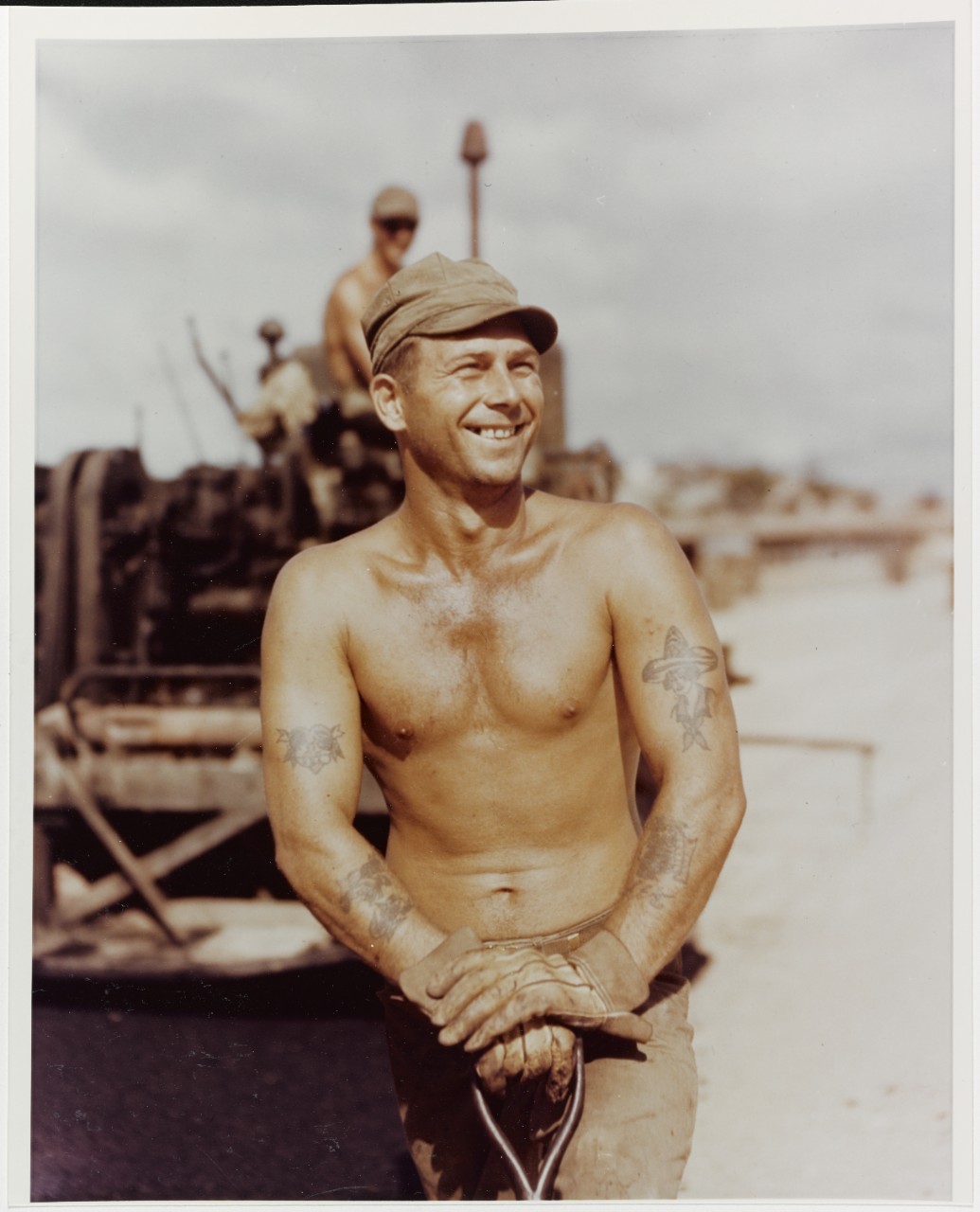
Sailor tattoos: why an anchor does not tell the whole story
Anchors, swallows and ships have histories, but no single universal meaning. Learn to read sailor tattoos through archive photographs and bring that context to your drawings.
TattooXpert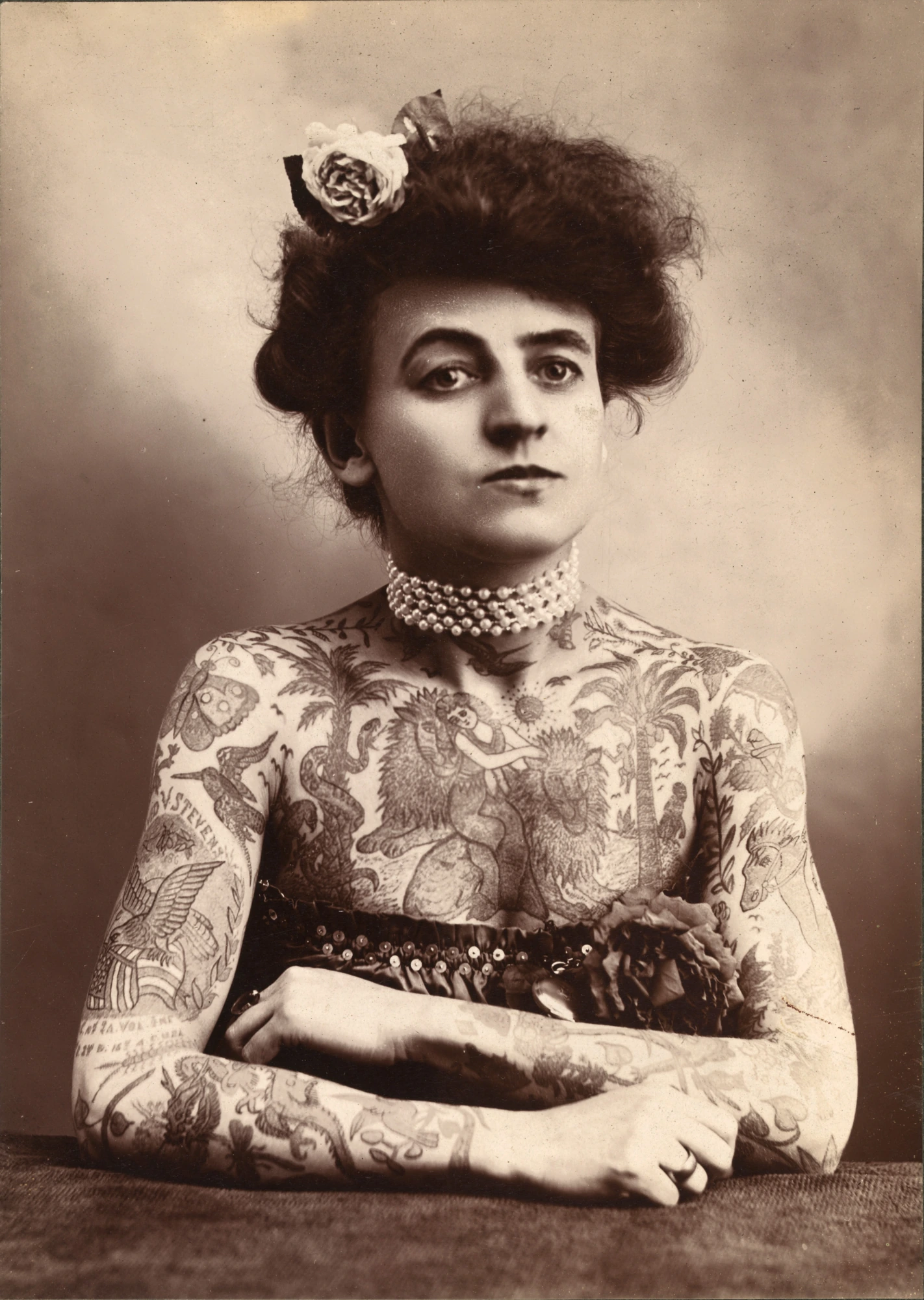
Maud Wagner, tattoo artist: the story beyond the portrait
Meet Maud Wagner beyond the portrait: her profession, historical sources and the questions a photograph cannot answer.
TattooXpert