
Your first tattoo convention: how to learn before you start tattooing
Plan a useful visit: what to study at booths, how to approach artists and how to turn your notes into practice, with real photographs and policy examples.
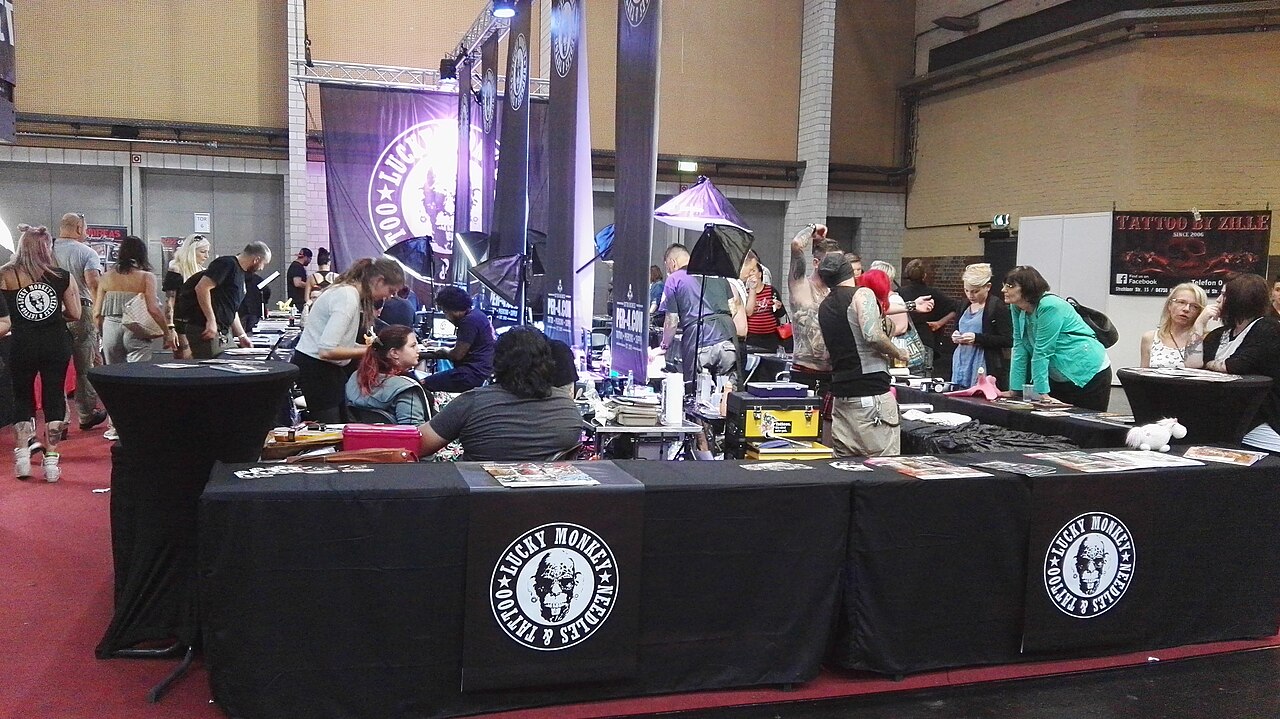
You arrive wanting to see everything: booths, drawings, contests and the artist you have followed for months. Two hours later, your phone might be full while you struggle to remember what interested you in each piece. To make your first tattoo convention worthwhile, bring a drawing question, plan a flexible route and leave room for conversations artists are willing to have.
You can approach the visit as a way to understand the craft before you start tattooing. This guide suggests how to observe, take notes and return home with something to practise. Getting an appointment or buying equipment does not have to be the measure of a successful day.
Start with a question you can investigate
Before browsing the artist list, write down what you want to understand. Wanting to discover neotraditional work is a starting point; wanting to compare how three artists arrange flowers around a face gives you a more specific task. Then look for work that will help you explore that decision.
Include artists you already know and someone unfamiliar. That gives you a chance to recognise differences rather than simply confirm your tastes. Note their names and booth locations, if the organiser provides a map, and keep some time free for other discoveries.
A convention does not have to settle your entire education in an afternoon. A short conversation, a carefully studied sheet or a better question can make the trip worthwhile. Resist turning the visit into a race to collect contacts.
Check admission and event rules separately
New York Tattoo Convention’s FAQ separates admission from tattoo appointments. Cagliari’s FAQ says leaving does not allow re-entry on the same ticket. Check the conditions for your event.
A small plan with room to change
Prepare enough to find your way and take breaks without having to improvise every decision. Consult the information for the specific edition: an older page may provide context but cannot confirm the current programme. The following is a suggested approach, not a set of requirements shared by every convention.
- Choose three booths and a different reason for visiting each.
- Save the organiser’s opening times, location and entry conditions.
- Check accessibility, rest areas and permitted belongings before travelling.
- Keep transport and admission costs separate from optional purchases.
- Bring a small notebook or set up a phone note for each artist.
Approach a booth without turning the visit into an interview
First, see whether the person is available. If they are tattooing, consulting with a client or speaking to another visitor, wait outside the working area. Avoid resting your belongings on their table or moving a camera closer to get a better angle. You can express your curiosity from the aisle.
When an opportunity arises, a brief introduction is enough: you are starting to draw and a particular decision in their work interests you. Ask whether they have a moment to talk. If they decline or cannot stop, thank them and move on. Insisting is not a way to prove your enthusiasm.
Asking what they look for when simplifying the leaves on a sheet gives the conversation a clearer focus than asking them to explain how to become a tattoo artist. These are suggested questions, not interviews conducted by TattooXpert.
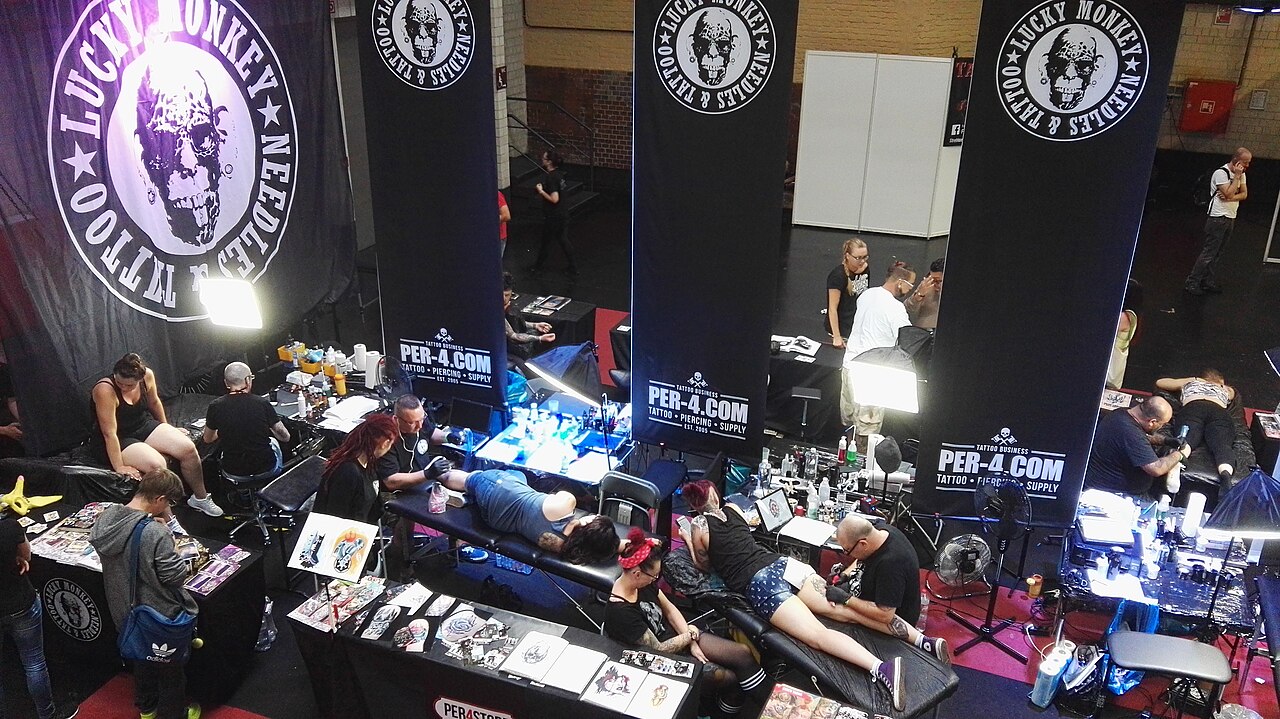
A booth seen from above
Read a flash sheet with a question in mind
Spend a few minutes with a sheet that interests you, provided it is displayed for visitors to consult. Instead of saving every motif, describe a relationship: changes in figure size, the position of the strongest colour or the similar outlines shared by different drawings. Record what you see and separate that from your interpretation.
For example, noting three differently sized flowers is an observation. Suggesting that the largest organises the sheet is a reading you can discuss. That distinction helps you learn from a work without presenting your impression as the artist’s confirmed intention.
Back in your sketchbook, invent different subjects and test the relationship you noticed. You can study an arrangement without reproducing the sheet itself. Our flash guide takes that next step further.
Photography starts with the organiser’s rules
Le Mondial du Tatouage restricts portfolio photography and use of images without prior permission. Berlin requests permission for close-ups and accreditation for professional camera equipment. These are organiser policies, not a universal rule.
Before taking a picture, ask what you may include and explain whether you intend to publish it. Make sure the person being tattooed is also comfortable appearing. If permission is not given, save the artist’s name and official profile instead. A useful visit does not depend on collecting photographs.
Seeing a drawing on display is not an invitation to copy it. A written note about what interests you can be enough. When sharing an authorised photograph, preserve the agreed context and credit. Do not claim the work as yours or imply that the artist endorses your project.
Contests are one part of the visit
New York Tattoo Convention lists contests for fresh and healed work. Categories and times appear in its programme.
If you attend a contest, first read what the category compares. Set yourself an observation question: how a piece reads at a distance, how its dark areas are distributed or what changes when you see it on a body. You do not need to maintain a personal league table.
An award can introduce you to an artist worth investigating, but avoid treating it as an automatic answer to every question. Explore more of that artist’s published work later to understand their direction. If the view from the audience is insufficient to assess a detail, leave the question open rather than inventing a confident verdict.
Bring a portfolio with reasonable expectations
You can bring a short selection of your own drawings if you want to ask for feedback. Before opening it, check whether the person is willing to look and has time. An admission ticket does not come with a critique session, and a brief response does not define your potential.
Choose work in which you can explain a decision and a difficulty. If someone agrees to discuss a drawing, listen without defending every line. Record the specific observation and consider what you can try afterwards. Our portfolio and feedback guides explain how to organise the selection and make a focused request.
The next part happens at home
Review your notes before adding more references. Choose one observation, one question and one exercise. You might compare two arrangements of a sheet, research an unfamiliar artist and draw a composition of your own at a different scale. Keep a record of who made each work and where you saw it.
If you agreed to contact someone, follow through with a specific, considerate message; do not turn every conversation into a mass request for an apprenticeship. The most valuable result of a first convention may be modest: seeing a little more clearly and knowing what you will work on tomorrow.
Sources and editorial notes
- New York Tattoo Convention — Attendee FAQ
- Cagliari Tattoo Convention — FAQ
- Le Mondial du Tatouage — Infos pratiques, photographies
- Tattoo Convention Berlin — FAQ, Fotos und Videos
- Z thomas — Tattoo convention August 2017 in Berlin, view 2
- Z thomas — Tattoo convention August 2017 in Berlin, view 1
Manufacturer and organiser facts are linked above. Our selection and reading advice expresses TattooXpert’s editorial judgement.
Our editorial methodKEEP EXPLORING.
Tattoo apprenticeship portfolio: what to include and how to arrange it
Build a tattoo apprenticeship portfolio: select your drawings, show your process and arrange the pages before approaching a studio.
TattooXpert
How to improve your tattoo drawings with useful feedback
Ask for useful feedback on tattoo drawings: focus the question, separate observation from taste and turn a comment into a test.
TattooXpert